Inside the US National Design Studio's 27,000-site overhaul
Joe Gebbia's National Design Studio had until July 4 to start fixing 27,000 federal websites. Here's what shipped, and what designers are flagging.
Industry · The Editors · 4 min read ·
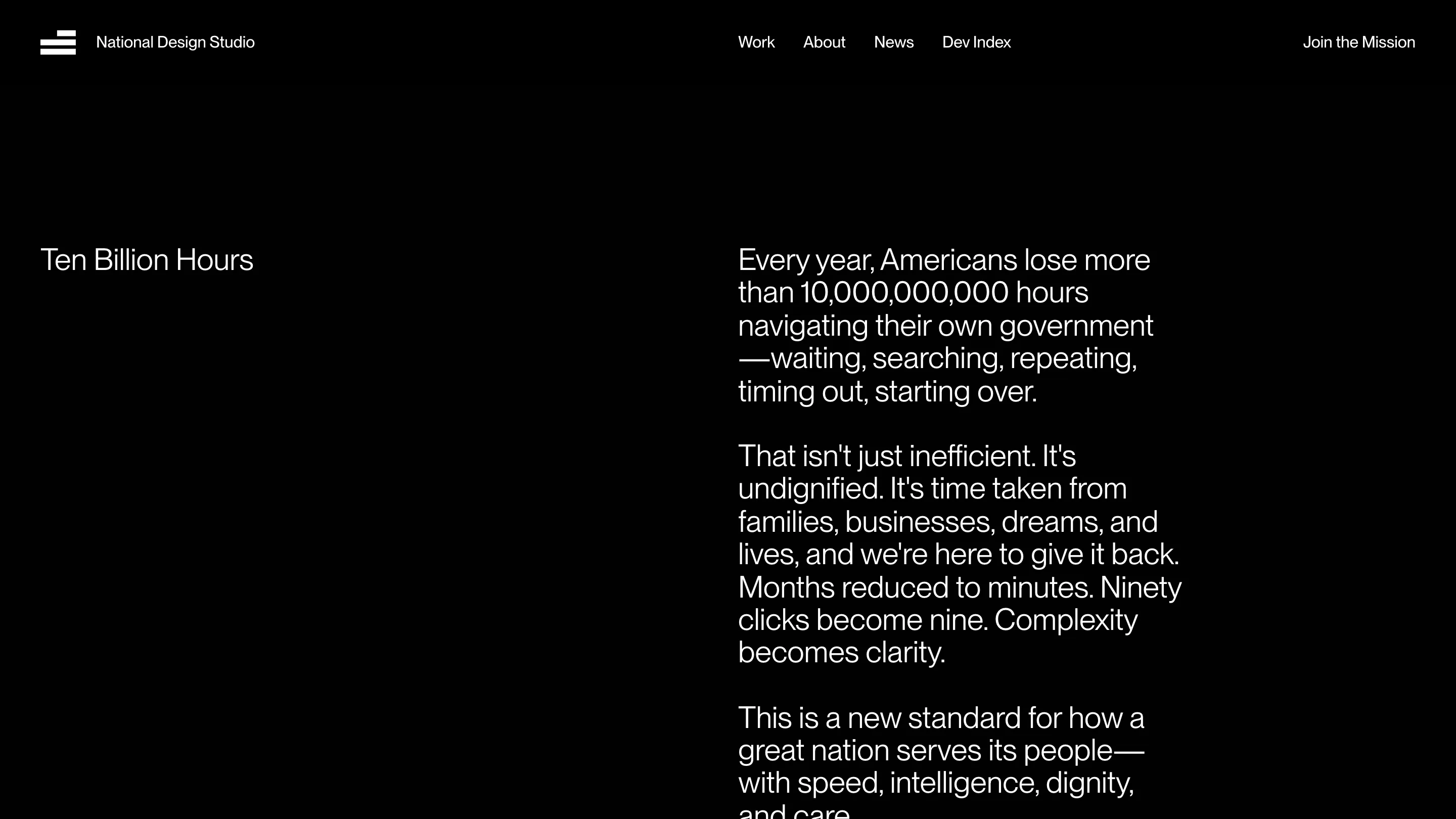
Featured: National Design Studio
The United States now has a Chief Design Officer, and his job is to redesign the government one website at a time. Joe Gebbia, who co-founded Airbnb, took the role in August 2025 under an executive order called America by Design. It set up the National Design Studio inside the executive office and gave it a hard first deadline: produce results by July 4, 2026. That date has passed, so here is where the work stands and what designers are already flagging in it.
The National Design Studio's one-system bet
The pitch is scale. More than 160 million people visit the government's 27,000 domains and subdomains every month, and most of those sites were built by different teams, in different years, under different rules. The studio's answer is to stop treating the U.S. Web Design System as an optional toolkit and start enforcing it as a brand standard every agency has to follow. Peter Arnell, the branding veteran behind identities for Reebok and DKNY, joined as Chief Brand Architect to push one visual language across the whole of government.
Gebbia's homepage leads with a single number. Americans lose more than ten billion hours a year to government paperwork and confusing sites, the studio says, and it frames its entire job as buying that time back.
What shipped by July 4
By early summer the studio had put out a run of new sites: TrumpRx.gov for prescription prices, RealFood.gov, TrumpAccounts.gov, Genesis at the Department of Energy, and TechForce.gov. Login.gov, the sign-in layer millions already use, is on the list too. Most of them share one look: big type, a lot of white space, full-bleed photography, the visual grammar of a well-funded startup landing page.
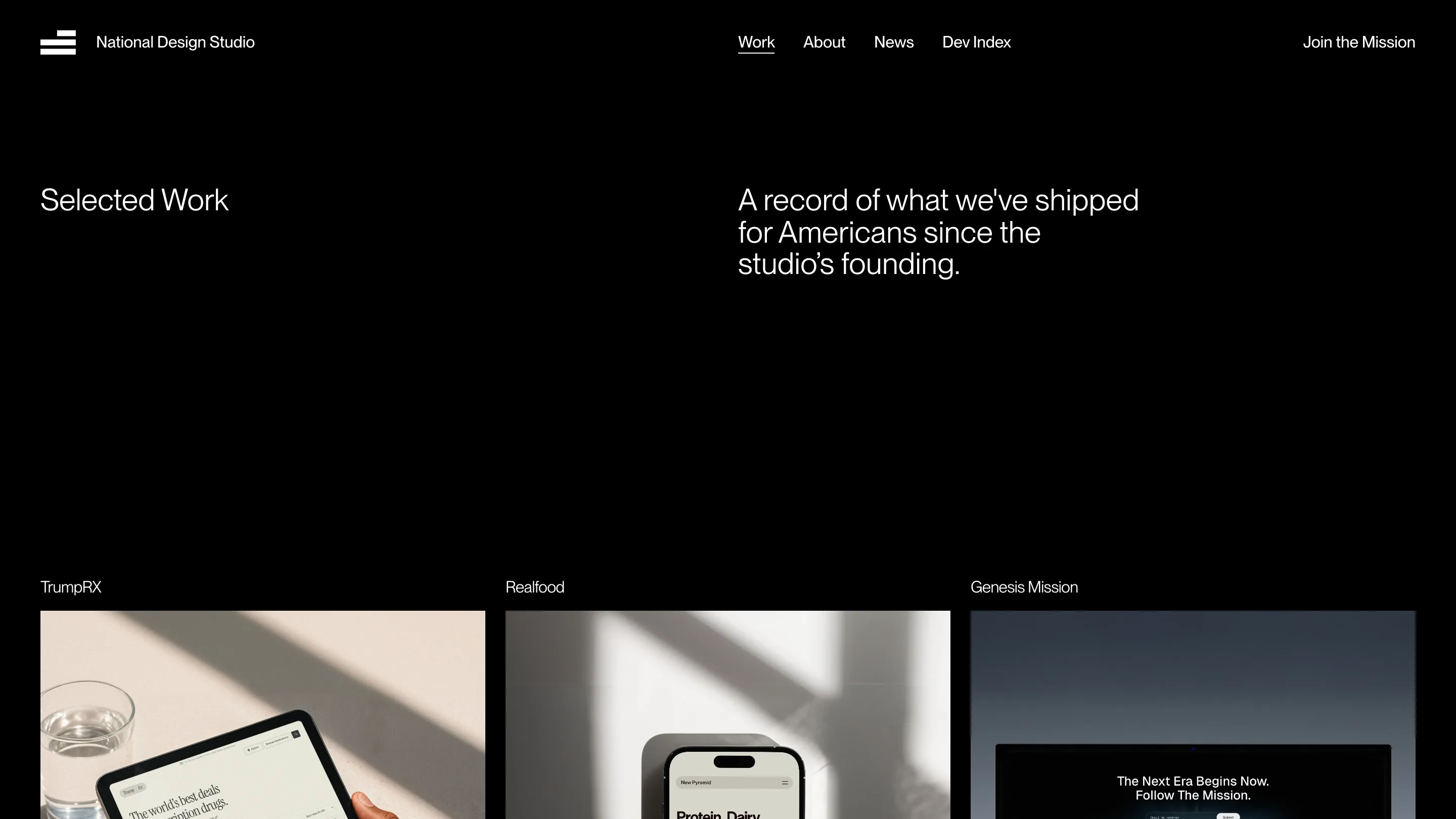
RealFood.gov is a fair example of the house style. It reads more like product marketing than a government form, which is exactly the point Gebbia keeps making in interviews.

Where the craft is falling short
The reviews from working designers are rough. Chris Hinds, COO of the accessibility firm Equalize Digital, checked several of the new sites against Section 508 and the Web Content Accessibility Guidelines, the standards federal sites are legally required to meet. His verdict: low-contrast text, missing heading structure, and none of them close to compliant. Ethan Marcotte, who coined the term responsive web design and spent time at the government's own 18F team, noted that some single landing pages ship several megabytes of assets, which prices out anyone on an old phone or a slow connection.
Then there is the code. Anna Cook, an accessibility specialist, looked at AmericabyDesign.gov and found heavy reliance on unedited AI-generated content, with markup she described as "either AI or sloppy." In June 2026 The Guardian reported that the studio's own site had been running 539 lines of custom code logging visitors' clicks and form entries without the disclosures the Privacy Act requires. The tracking came down after reporters asked about it.
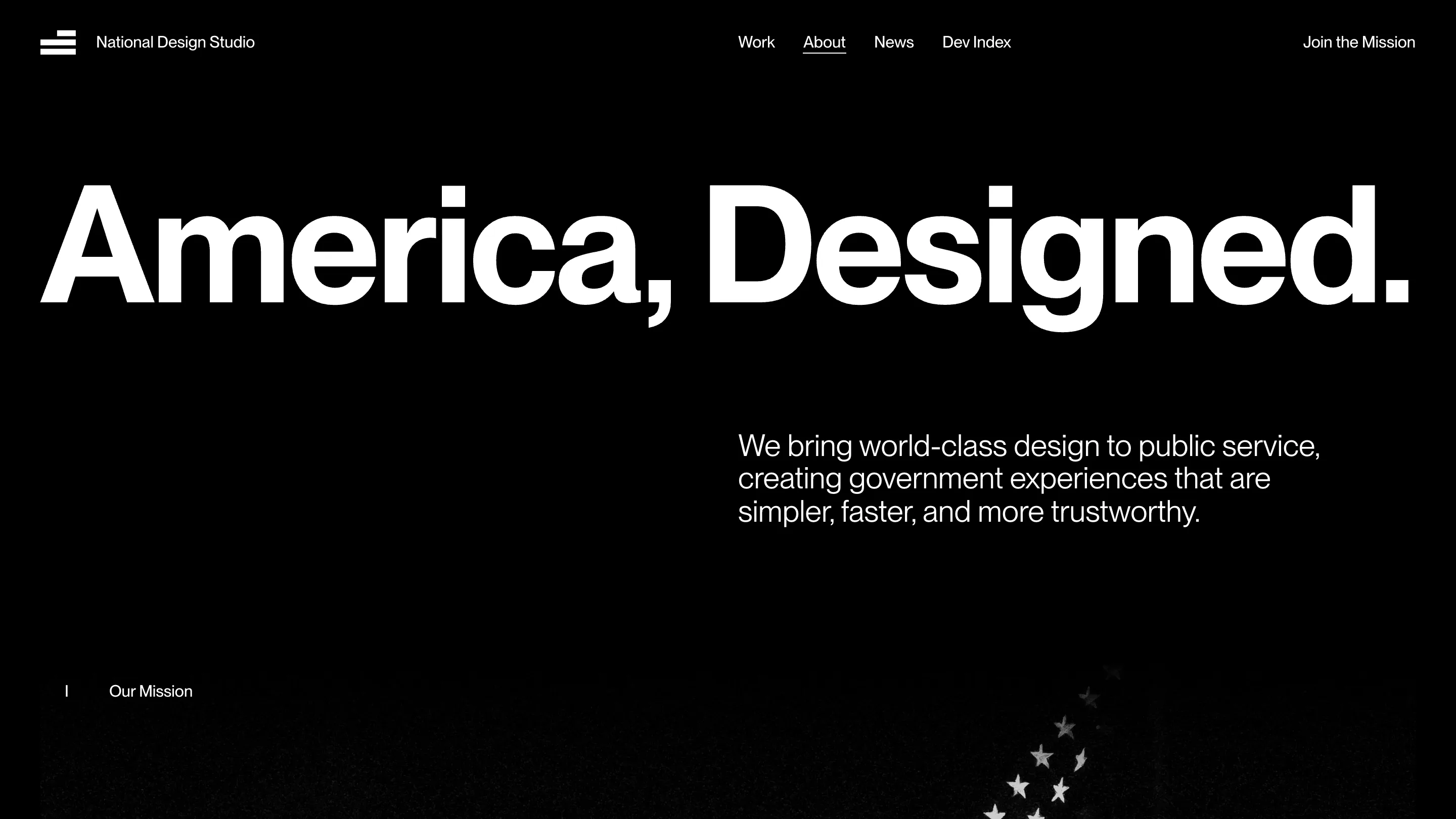
Why it matters for the rest of us
Set the politics aside and the experiment is still worth watching, because it is the biggest test yet of design-system-as-mandate. A toolkit invites teams to opt in. A brand standard tells 400-plus agencies they have no choice. If it holds, it becomes the strongest argument going for centralized systems. If the accessibility and performance problems stick, it becomes a public lesson in what happens when you ship the visual layer fast and leave the fundamentals for later. Either way, the people who build digital products for a living are getting a very large, very public case study.