Sketch stacks now take negative gaps and min/max sizing
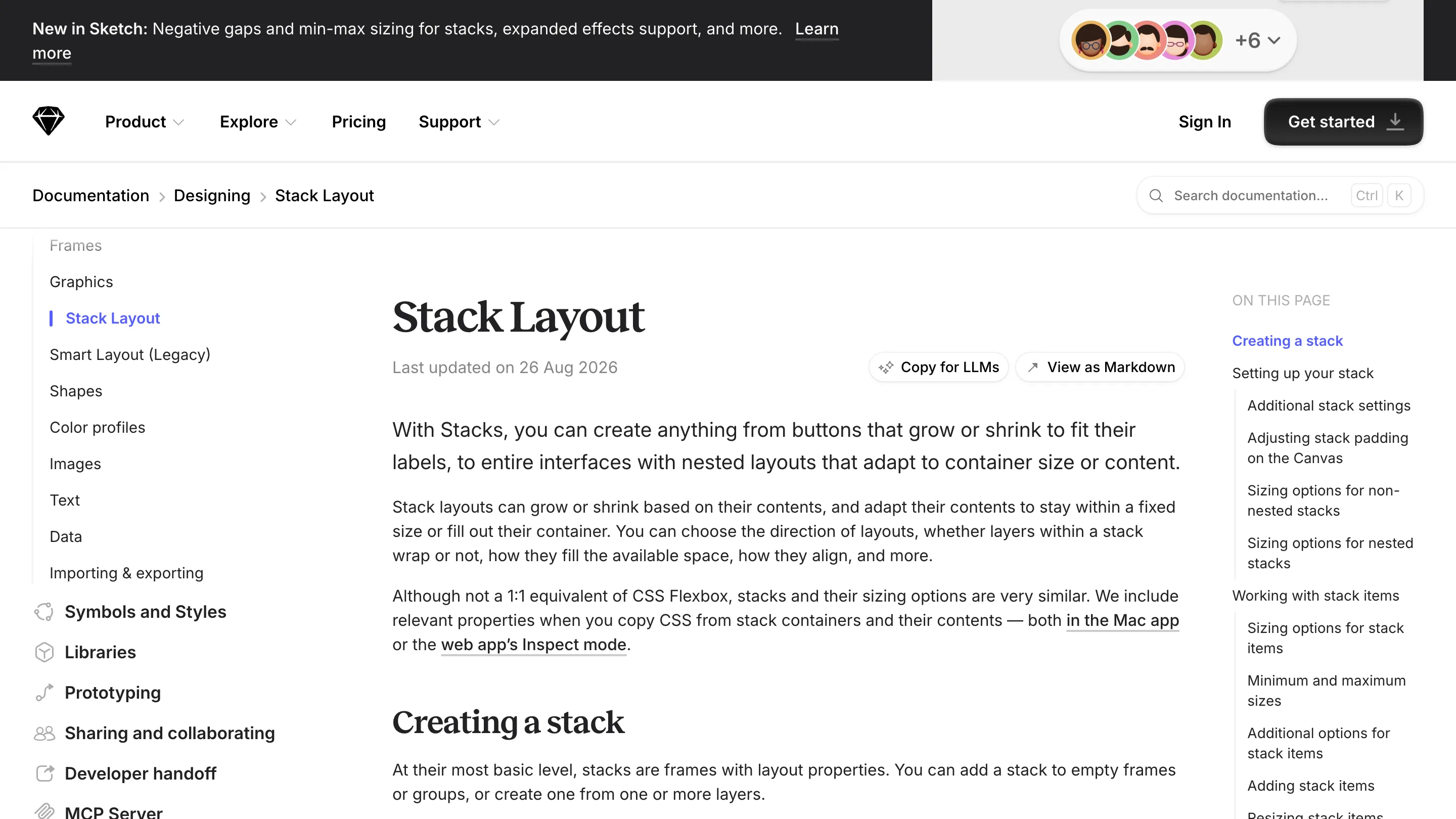
Florence, Sketch’s third release of 2026, lets stack items overlap with negative gaps and hold min and max sizes. Avatar rows stop being hand-made.
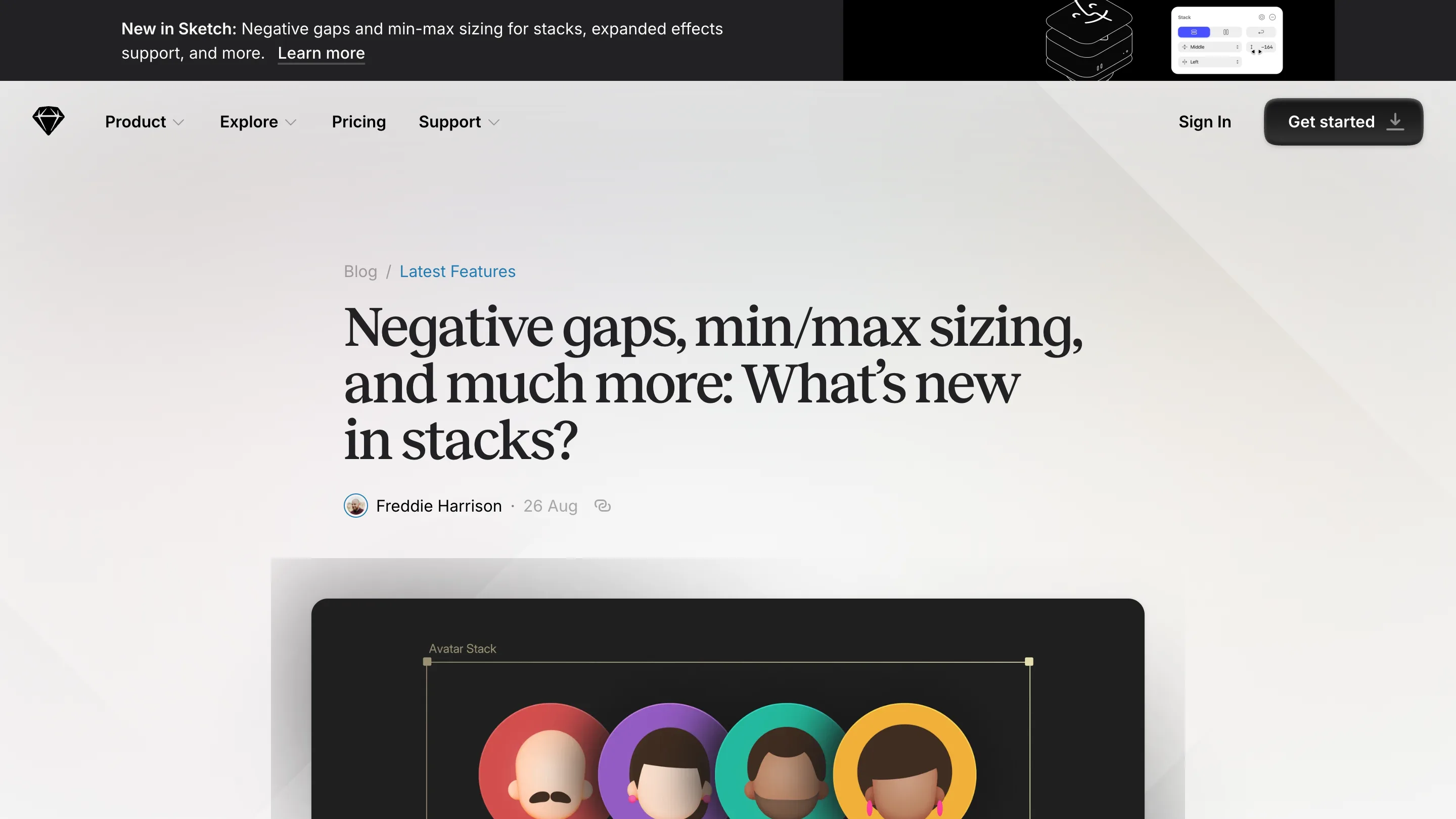
Sketch stacks can overlap now. Florence, the release Sketch shipped on 26 August, accepts a gap below zero, which means the avatar row you used to fake with absolute positioning is a real stack that survives a content change. It's the smallest thing in the release and the one you'll reach for first.
The rest of Florence sits in the same territory. Sketch spent this cycle on the layout engine, and on where effects are allowed to live.
Negative gaps make Sketch stacks overlap
Set the gap to -16 and the items slide over each other. There's no floor on the value, which Sketch left open on purpose. Overlapping cards, avatar groups, stacked receipts, ticket stubs: anything you'd build in CSS with a negative margin.
Overlap raises a question the tool has to answer, which is which item sits on top. Florence adds a stack settings panel behind a gear icon with two choices: First on top, the default, or Last on top. The setting only changes what you see on the canvas. The layer list keeps its order, so nothing downstream gets confused.
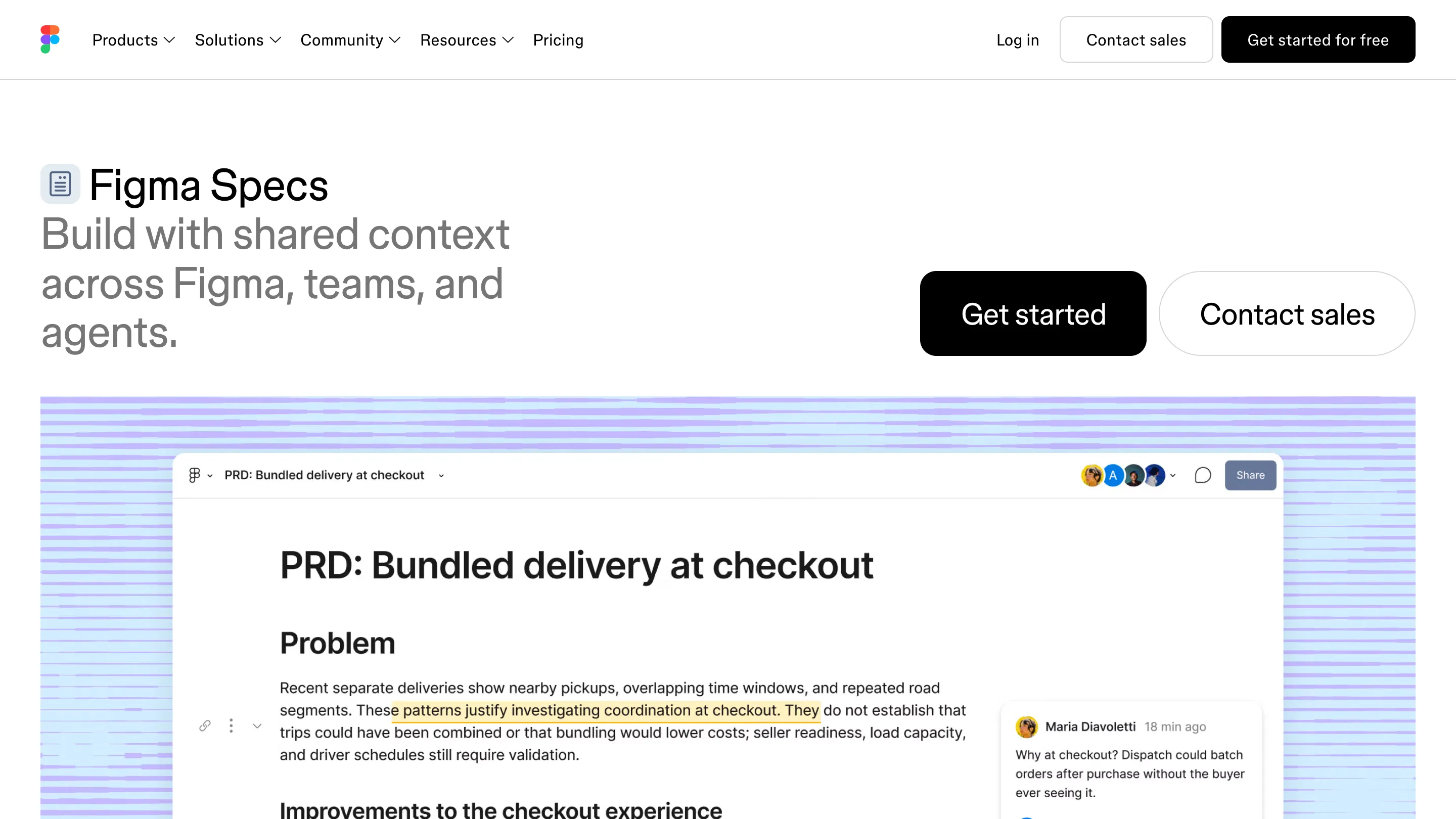
Figma has shipped the same pair of options for years and defaults the other way, to Last on top. If you move files between the two tools, that's the line to remember.
Percentages that split what's left
Stack items can take a relative size now, and the behavior is worth reading twice. A percentage divides the space left after the fixed items are placed, not the width of the whole stack.
Sketch's own example: a 100-point stack holding one fixed 50-point item and two items set to 50% gives you two items of 25 points each. Fifty points are spoken for, and the fifty that remain get split in half. That's how flex-basis behaves in CSS, so it's the right call, but it will catch anyone who reads 50% as half the container.
Minimum and maximum sizes land alongside it, one of each per axis. A card can grow with its text and stop at 480. When a max size cuts an item short on the cross axis, the alignment control decides where it sits in the leftover room.
The limit worth knowing: min and max take absolute values only. No percentages. A component that should never pass 60% of its parent is still a manual job.
Effects stopped being a single-layer privilege
The second half of Florence moves effects into places that used to reject them. Blurs, layer and motion and zoom, now apply to groups. Frames with no fill can carry several drop shadows, and so can groups. Glass and fade can sit on the same layer, and fade reads the opacity already on that layer instead of overwriting it.
Sketch says rendering also got faster when several shadows and effects pile up, which is the kind of fix you only register when it stops being slow.
What it costs to install
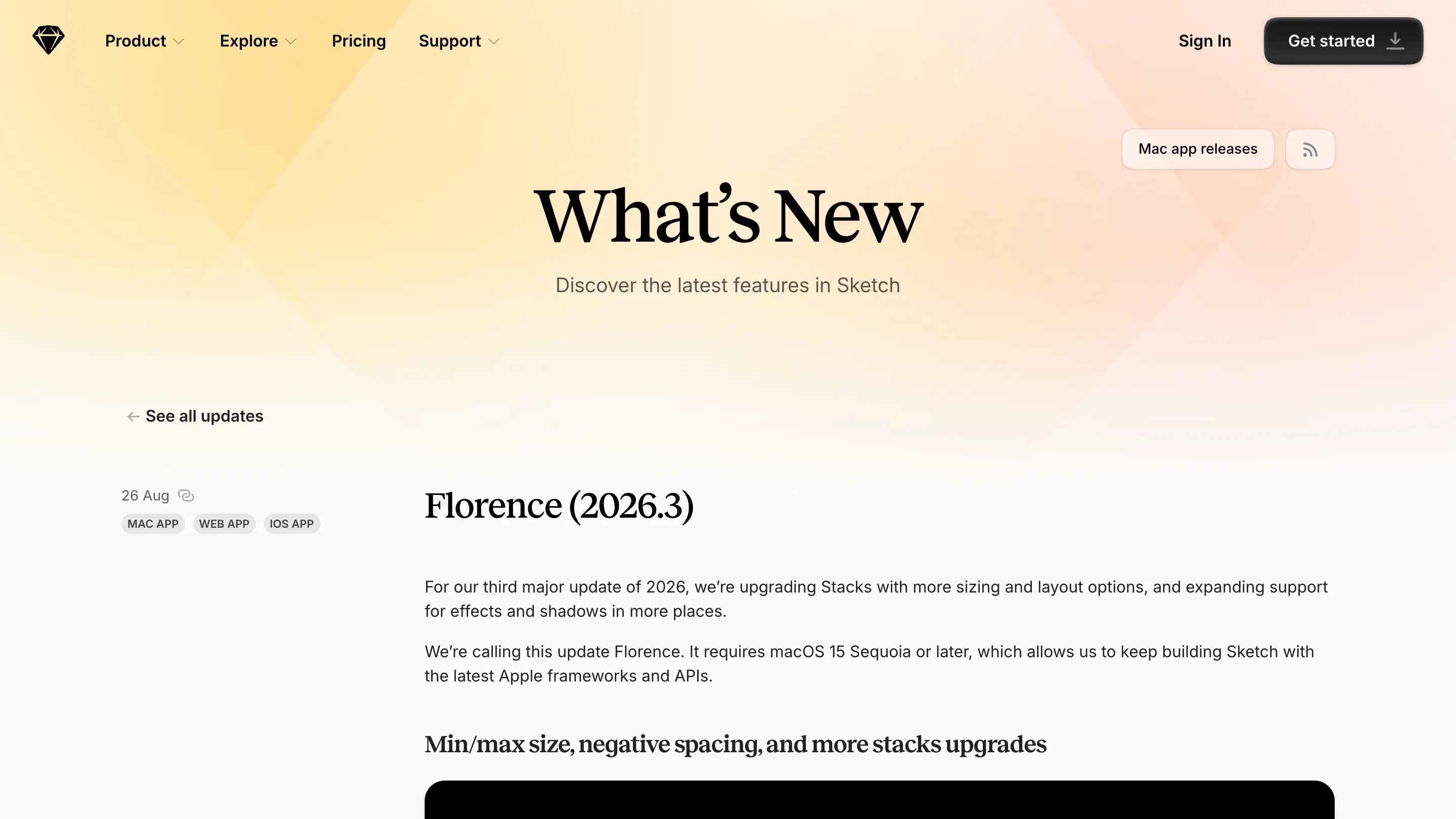
Florence needs macOS 15 Sequoia. Sonoma support ends here, so a machine that can't move past 14 stays on the previous version. Sketch is Mac only, and that hasn't changed.
Also in the release: the symbol inspector collapses into one settings panel, the scale tool picked up smart guides, and images whose color space differs from the canvas render up to 80 times faster.
Worth opening today?
If you keep a component library in Sketch, yes, and the first hour goes to the avatar and card patterns you built by hand. The new controls hide in that stack settings panel, so look for the gear icon before you conclude they're missing.
If you left for Figma, none of this pulls you back on its own. Sketch closed a gap here rather than opening one. What the release does say is that the team is still rebuilding the layout engine three updates into 2026, which is more than you can assume about most design tools this year.