Studio Kiln built BAFTA's motion-first identity as one particle system
Kiln designed the 2026 BAFTA identity as a running simulation in Cavalry, then pulled the films, posters and stage graphics out of it. What BAFTA got at the end was the system, not a folder of files.
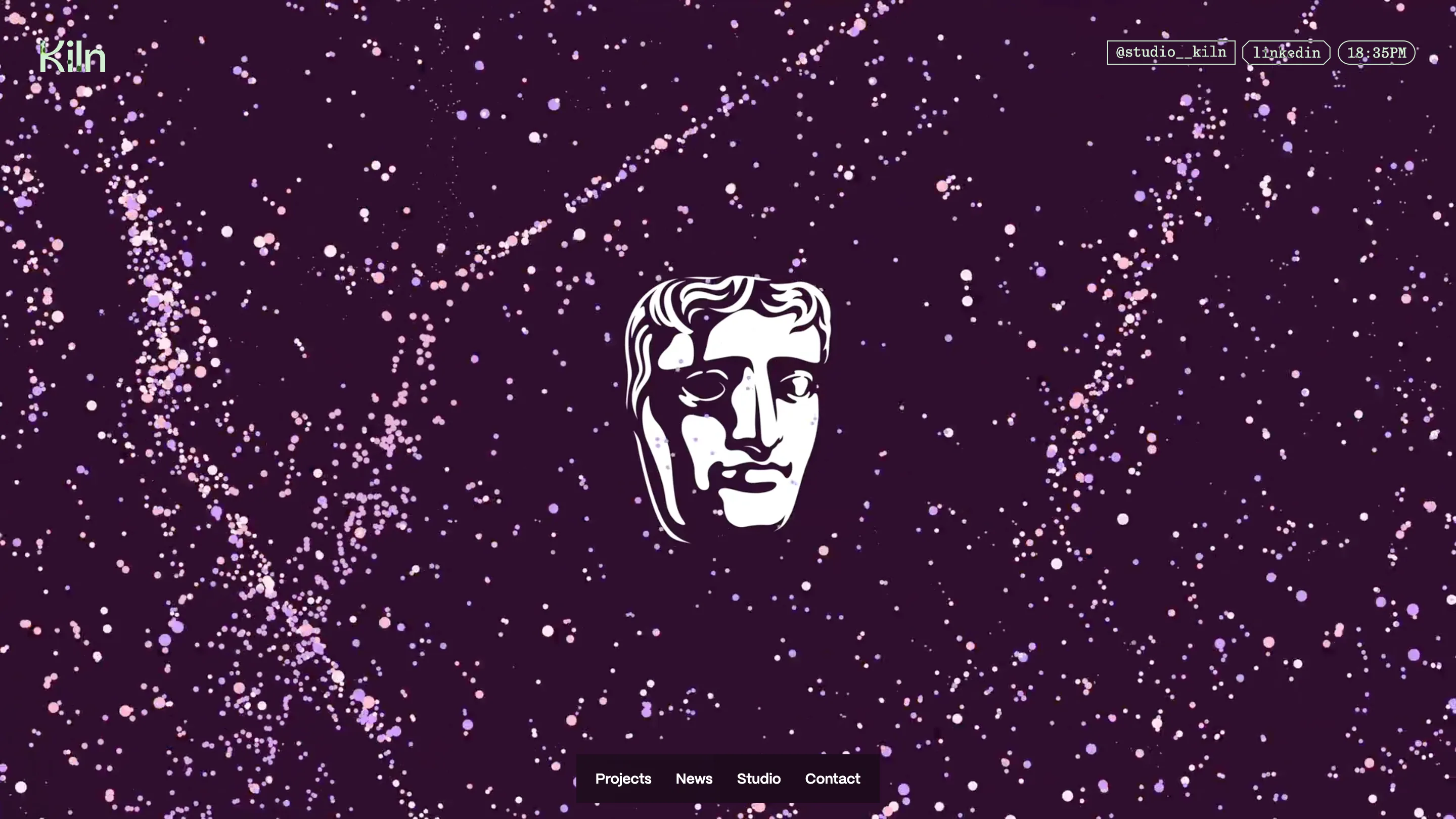
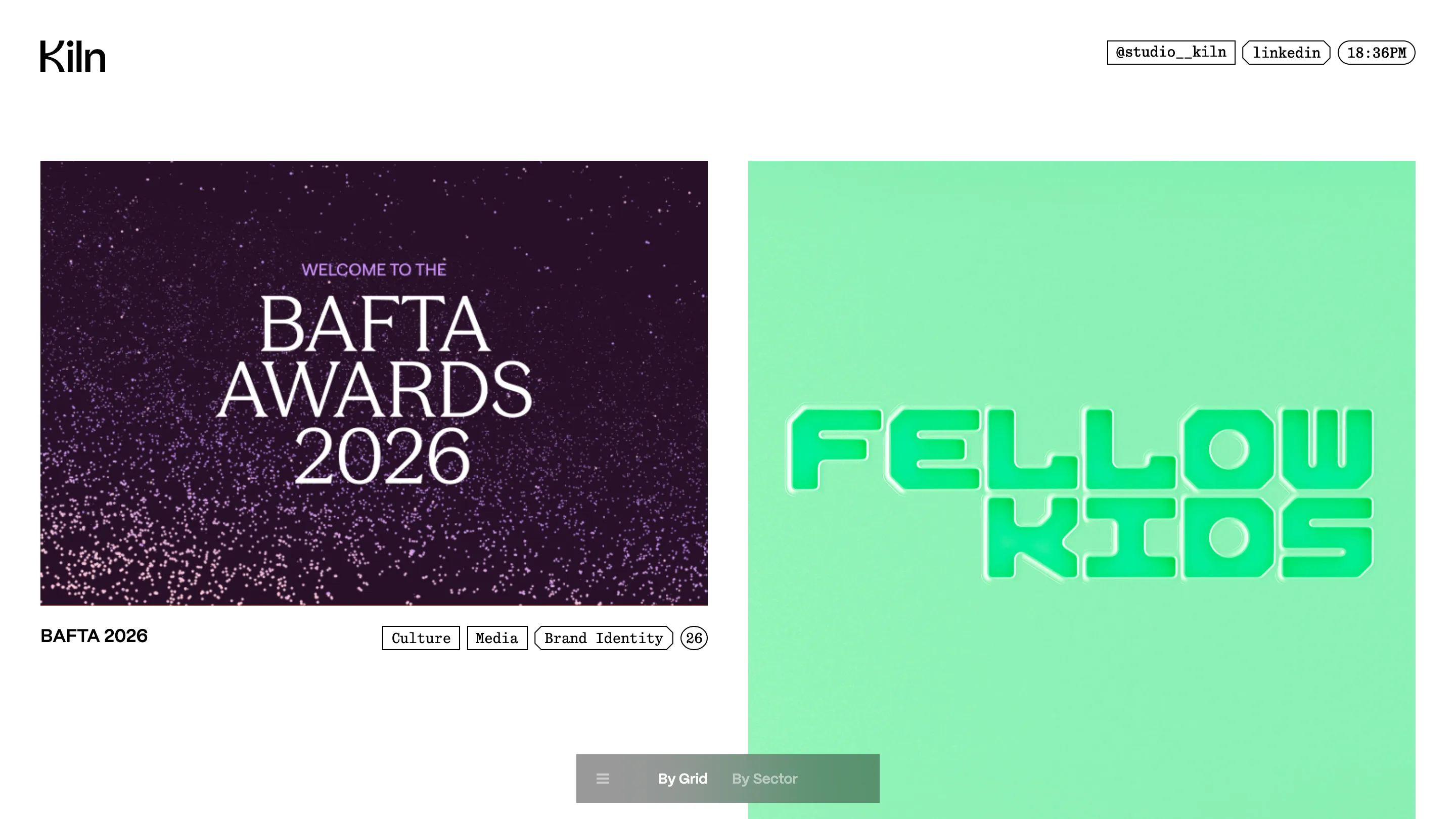
Studio Kiln designed BAFTA's 2026 identity as a simulation that runs, then generated the artwork from it. Films, posters, stage screens and social cuts all come out of one particle system built in Cavalry. Four ceremonies, one procedural setup.
The work covers the BAFTA Film, Television, Games and Television Craft awards. It replaces the colour-led system BAFTA had been using, and it started in October 2025 as a PR campaign brief before it grew into the identity itself. Studio Kiln is a London studio whose client list runs through ITV, Netflix and Vinted.
Motion came first, and the rest followed it
Most identity work starts with a logo, a typeface and a grid, and motion arrives at the end as an application. Kiln inverted that order. The particles were designed first, and every later decision answered to how they behaved.
Coloured particles drift, collide and gather until they resolve into the facets of BAFTA's mask. The idea is an idea becoming a finished piece of work, which is a soft concept, but the execution is precise: the same particle physics, the same movement, the same typography across all four ceremonies, with only the resolved shape and the palette changing. Type is Season and Season Sans from Displaay, an angular serif carrying the heritage and a sans doing the working copy.
That consistency was the hard part. Film is the ceremony with the cameras on it, and the other three are easy to let slide. "The biggest challenge was making sure every ceremony felt equally refined and crafted, just in its own way," said Meg Mardon, who worked on design and motion alongside Edoardo Albertini. Charlie Hocking and Nathan Smith ran creative direction. On BAFTA's side the project was held by Natalie Paszkowski, Nayumi Suyama and Samira Moodie.
Cavalry instead of After Effects
The tool choice is the story under the story. Kiln built the whole thing in Cavalry, a procedural motion tool, rather than animating in After Effects. Cavalry lets you drive a simulation with rules and parameters and re-render it at any size or duration, so a 30-second title film and a six-metre stage graphic come from the same node graph.
Albertini's framing was that the team could build the world of particles once and then generate everything else out of it. That is the difference between a system and an asset library. Nobody rebuilds the identity per touchpoint, because there is only one thing to rebuild.
Static was the problem, not motion
An identity made of movement gets awkward the moment it has to sit still on a poster. Kiln's answer was to find the streams, the moments where particles bunch densest and the composition reads hardest, and freeze there. The stills are frames of the simulation rather than separate artwork drawn to match it, which is why the print and the screen work look like the same brand instead of cousins.
The handover is the system
Kiln shipped BAFTA a set of curated artwork suites per ceremony plus usage rules, so the in-house team can extend it without going back to the studio for every new asset. That is the part worth borrowing if you make digital products. A design system that ships as components and rules keeps working after the agency invoice clears. A design system that ships as 400 exported PNGs starts decaying the same week.
The 2026 BAFTA identity is the same argument, rendered in particles. Kiln sold BAFTA a machine and a manual for running it. Everything visible is output.