
RCA merges design and communication into one school
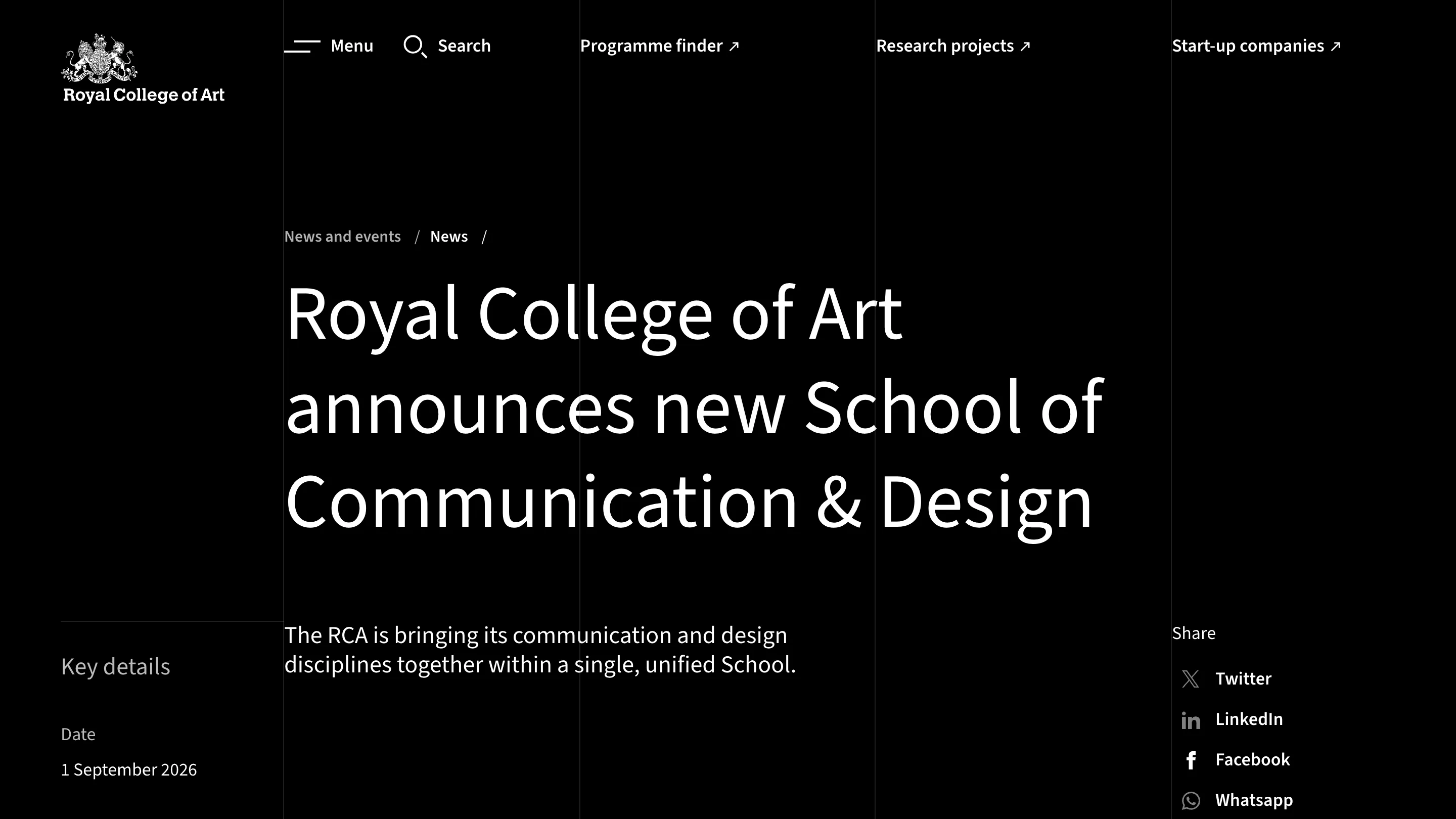
The Royal College of Art went from four schools to three on 1 September, putting 15 design and communication programmes under one dean.
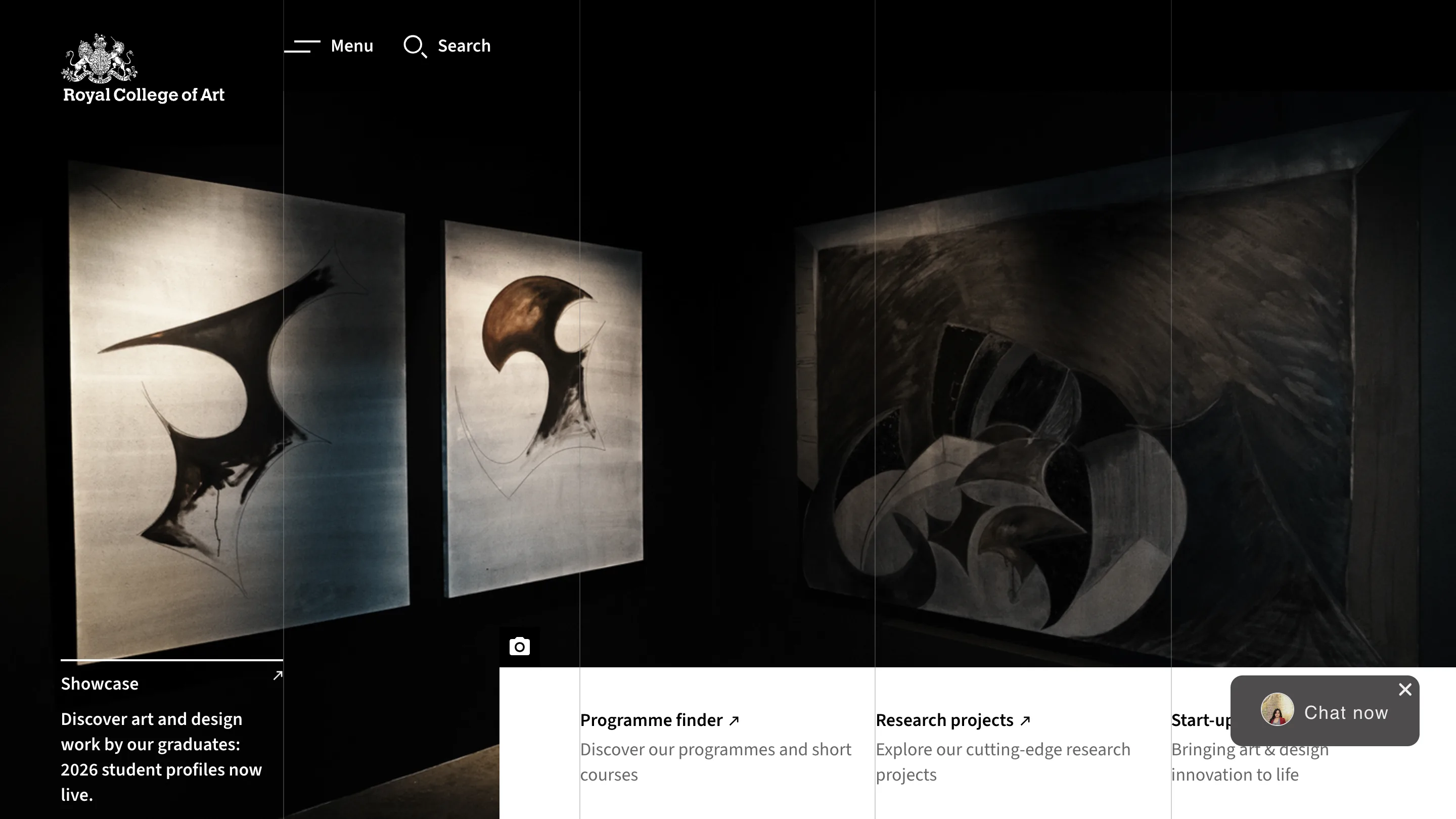
The Royal College of Art runs three schools now instead of four. On 1 September it merged the School of Communication and the School of Design into one School of Communication & Design, with 15 programmes under a single dean. Architecture and Arts & Humanities carry on as they were. It's the biggest structural change to design education at the RCA in years, and it lands squarely on the courses that feed product teams.
Service Design MA, Digital Direction MA, Information Experience Design MA and Innovation Design Engineering now share a school with Fashion, Textiles, Animation and Design Products. Same dean, same planning cycle, same budget conversations. Professor Kerry Curtis, Professor of Design Education, is the dean, working with Anne Toomey as interim associate dean, Barbara Brownie on education and Danielle Barrios-O'Neill on academic planning. The school spans all three RCA campuses: Kensington, Battersea and White City.
The reason the RCA gives is AI
The college is direct about the trigger. "As technologies like AI continue to transform how we communicate, design and make," Curtis said in the announcement, the RCA's job is to shape that change rather than react to it. President Christoph Lindner put it as alignment: bringing the fields together, he said, creates "the conditions for greater interdisciplinary collaboration."
Strip the institutional register and the claim is one working designers already recognise. Somebody shipping an onboarding flow this week writes the copy, sets the type, storyboards the motion and briefs whatever model generates the illustration. The old split between communication and design was already thin. The RCA has redrawn the org chart to match the job.
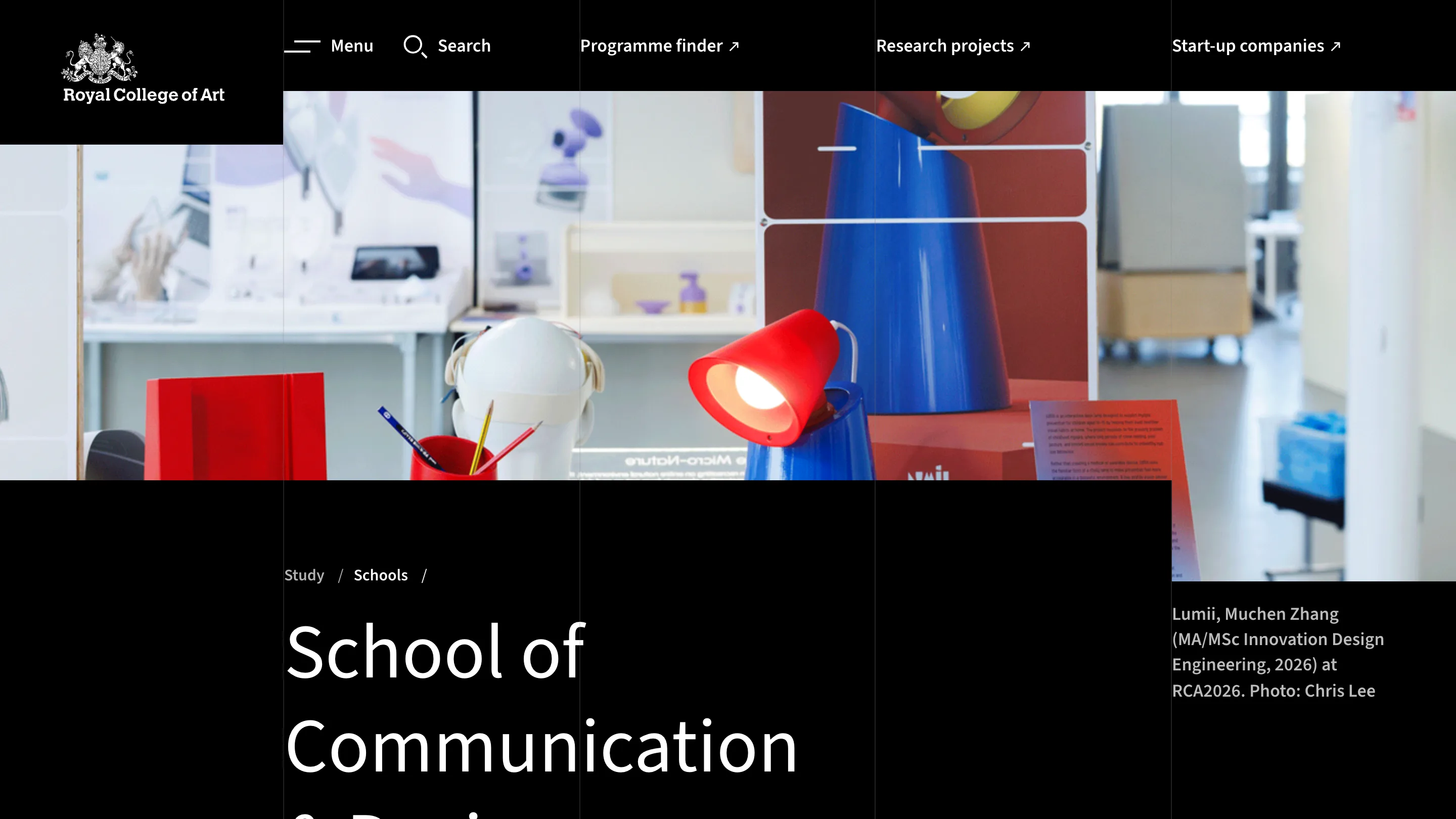
What it changes for design education
The practical effect is proximity. A Service Design student and a Visual Communication student now belong to the same school, which decides who shares a studio, who sits in whose crit, which electives cross-list, and which briefs get written jointly. Those decisions used to need two schools to agree. Now they need one.
That matters to anyone hiring juniors. The RCA sends a steady stream of graduates into product and platform teams, and QS has ranked it first in the world for art and design for twelve years running. If the merge does what the RCA says it will, portfolios coming out of Battersea in 2028 will belong to designers who have already worked next to a motion designer, a textiles researcher and an engineer. The industry partners listed on the new school page point the same way: Snap Inc, CERN, Aardman, Arup, Telefónica.
The org chart is the easy part
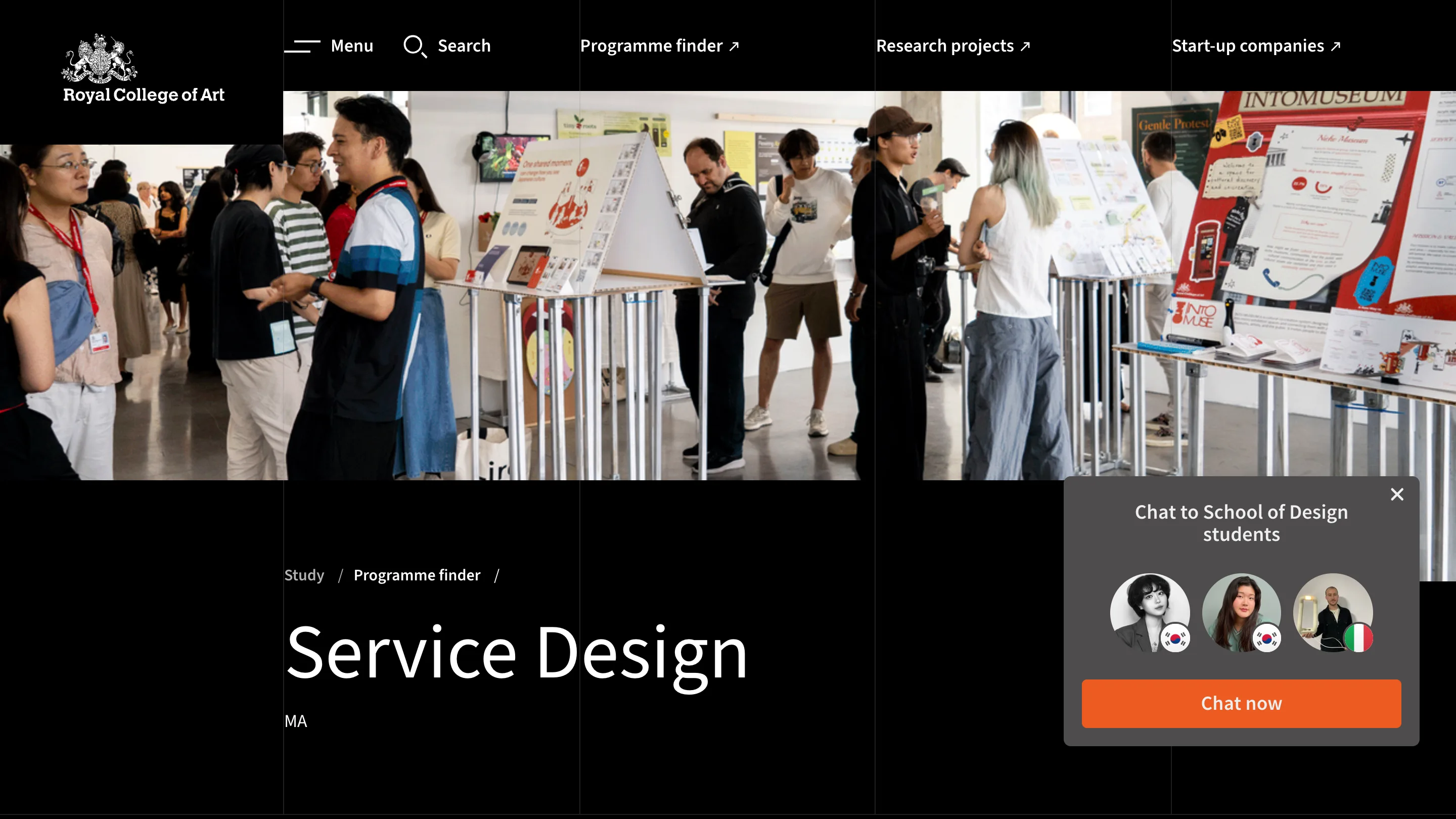
Restructures are cheap to announce and slow to land. Two days after the merge, the Service Design MA page on rca.ac.uk still offers a chat widget headed "Chat to School of Design students." That's a trivial fix and nobody should read much into it, other than the obvious: a school is a name at the top and then a long tail of pages, timetables, briefs, staff contracts and crit rooms that have to catch up with it.
The version of this that fails is a shared letterhead over two faculties that keep teaching exactly as before. The version that works shows up in the timetable, in mixed crit panels, in graduate shows where the animation and the service blueprint sit in the same room because the students actually built them together.
What to watch
Two signals will tell you which one happened. First, the RCA2027 and RCA2028 graduate shows: whether projects credit collaborators from across the old Communication and Design line, or stay inside their programme. Second, the briefs. Cross-programme briefs written by one school are easy to schedule and hard to fake.
Design education tends to trail practice by a few years. Here the Royal College of Art has moved its structure to where the work already is. Whether the teaching follows is a 2027 question.