Duolingo buys a third studio to keep motion design in-house
Duolingo acquired London studio Animade on 13 August, its third motion design studio in four years. Animade's site is now a goodbye and an archive.
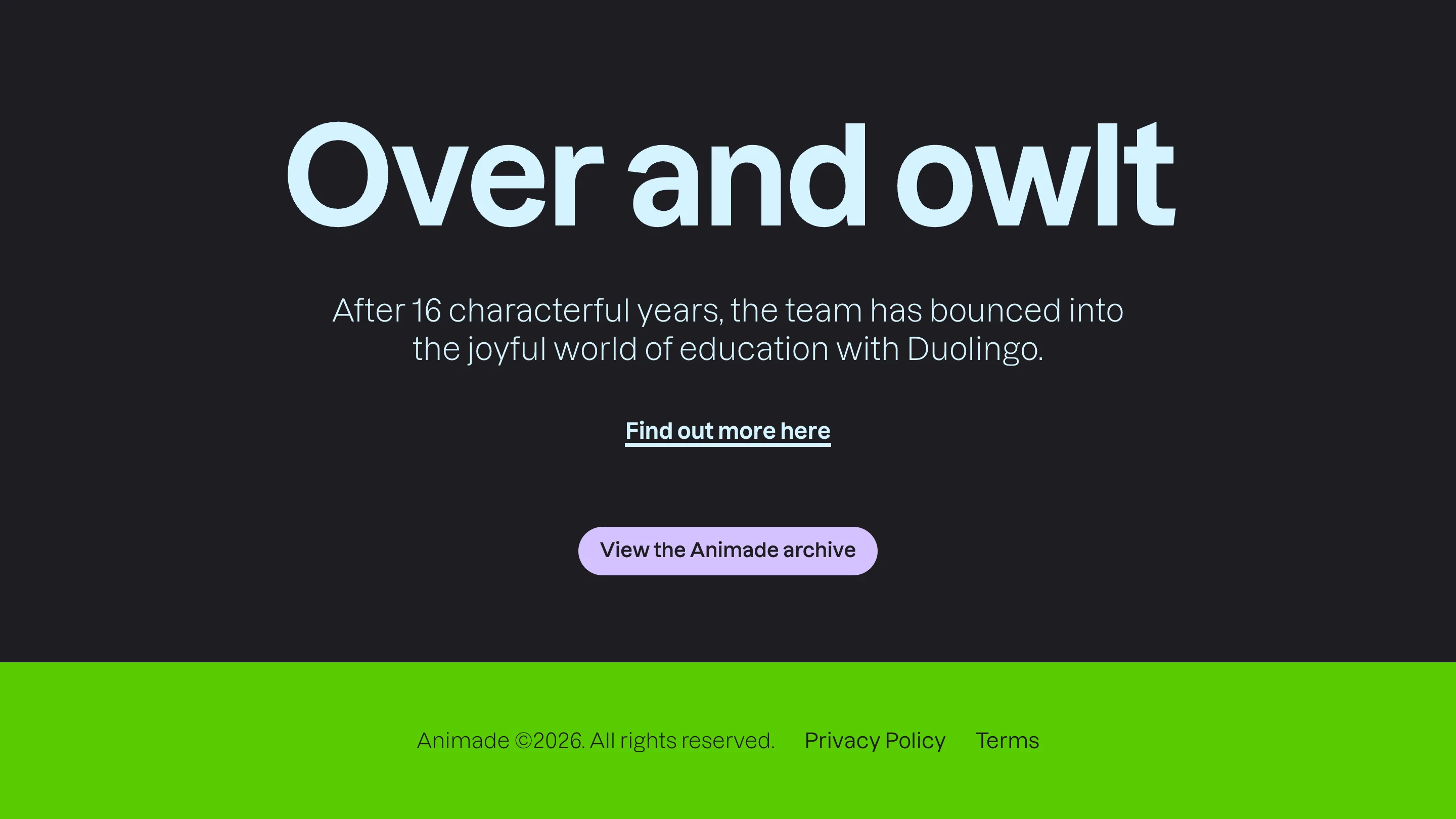
Duolingo bought Animade on 13 August, and animade.tv is now a single screen that says goodbye. The London studio ran for 16 years and animated for LEGO, Apple, Dropbox and YouTube. Its team has moved into Duolingo's Design Studio. That makes three studios in four years that Duolingo has bought to keep motion design in-house.
Three studios in four years
Gunner came first, a Detroit shop absorbed in 2022 with 15 designers, illustrators and animators. Hobbes followed in 2024, 12 people, and that deal gave Duolingo a standing motion design team for the first time. Animade is the best known of the three. Terms went undisclosed on all of them.
Mig Reyes, Duolingo's head of design, said the reason plainly: "Motion design has become a core part of how we help learners understand, enjoy, and return to Duolingo every day." Return is the word doing the work there. The owl's reactions, the streak flame, the burst at the end of a lesson: those are retention mechanics counted in frames, and a company that reported 140.6 million monthly active users for the quarter ending 30 June treats them the way it treats a database.
What in-house motion design changes
Hire an agency and motion arrives as a deliverable, rendered and handed over per campaign. Own the animators and it arrives as a system: easing curves someone owns, a rig the character reuses, a library of reactions that new features can pull from without a new brief.
Animade's own service list gives away how ready they were for that. Alongside 2D, 3D and hand-drawn animation, they sold motion guidelines and sound design. Motion guidelines is the tell. That's a studio used to writing the rules a product team follows after the studio leaves the room, which is roughly the job description they now have permanently.
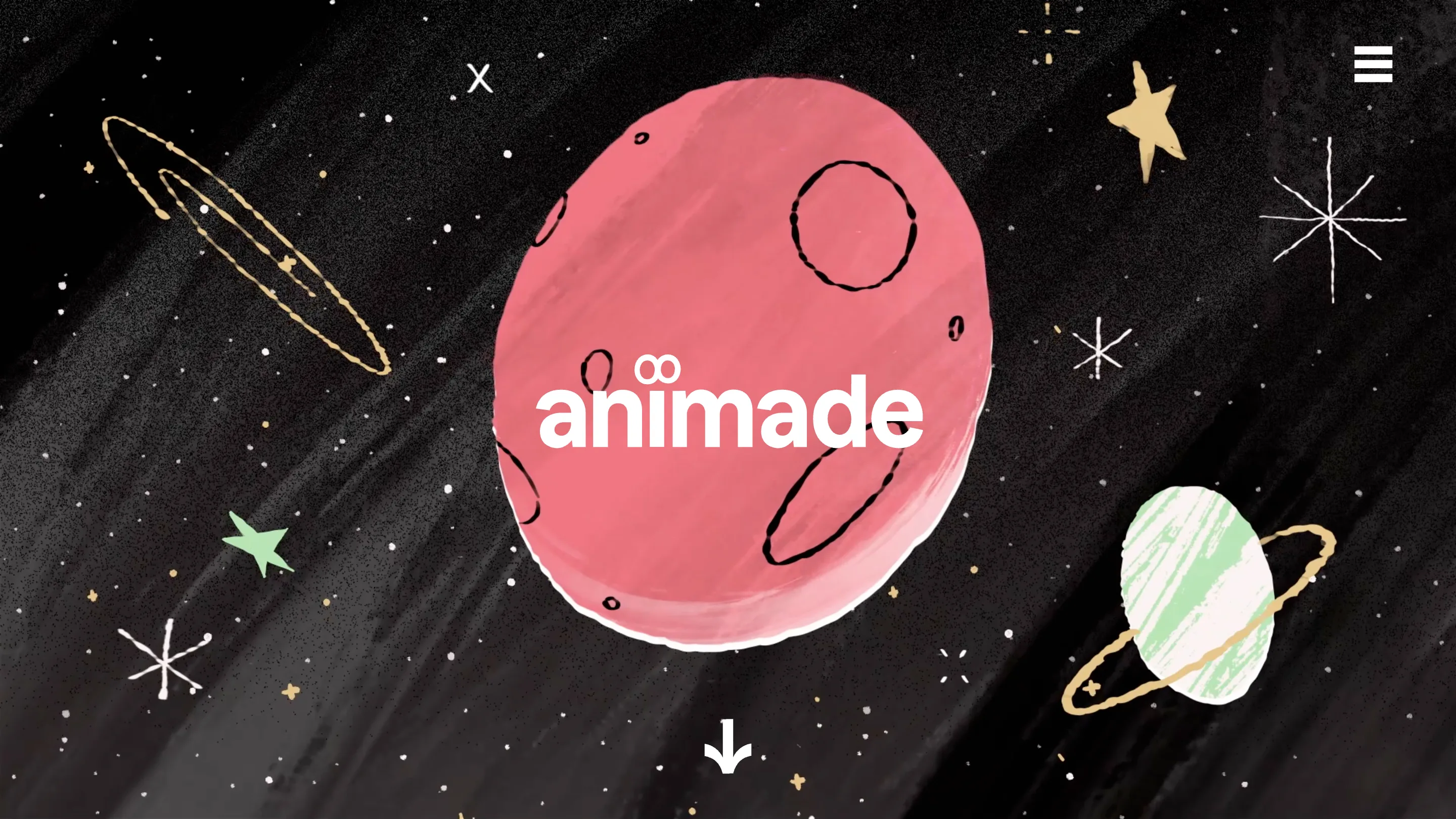
Jen Judd, who co-founded Animade in 2010, framed it as continuity: "Since day one, Animade has been on a mission to share joy through thoughtful design and animation." Joy is a fair description of the archive. The landing image is a pink planet drawn with a chalky brush, orbited by wonky gold rings and stars that look hand-inked, wordmark sitting flat on top of it.
The craft in the archive
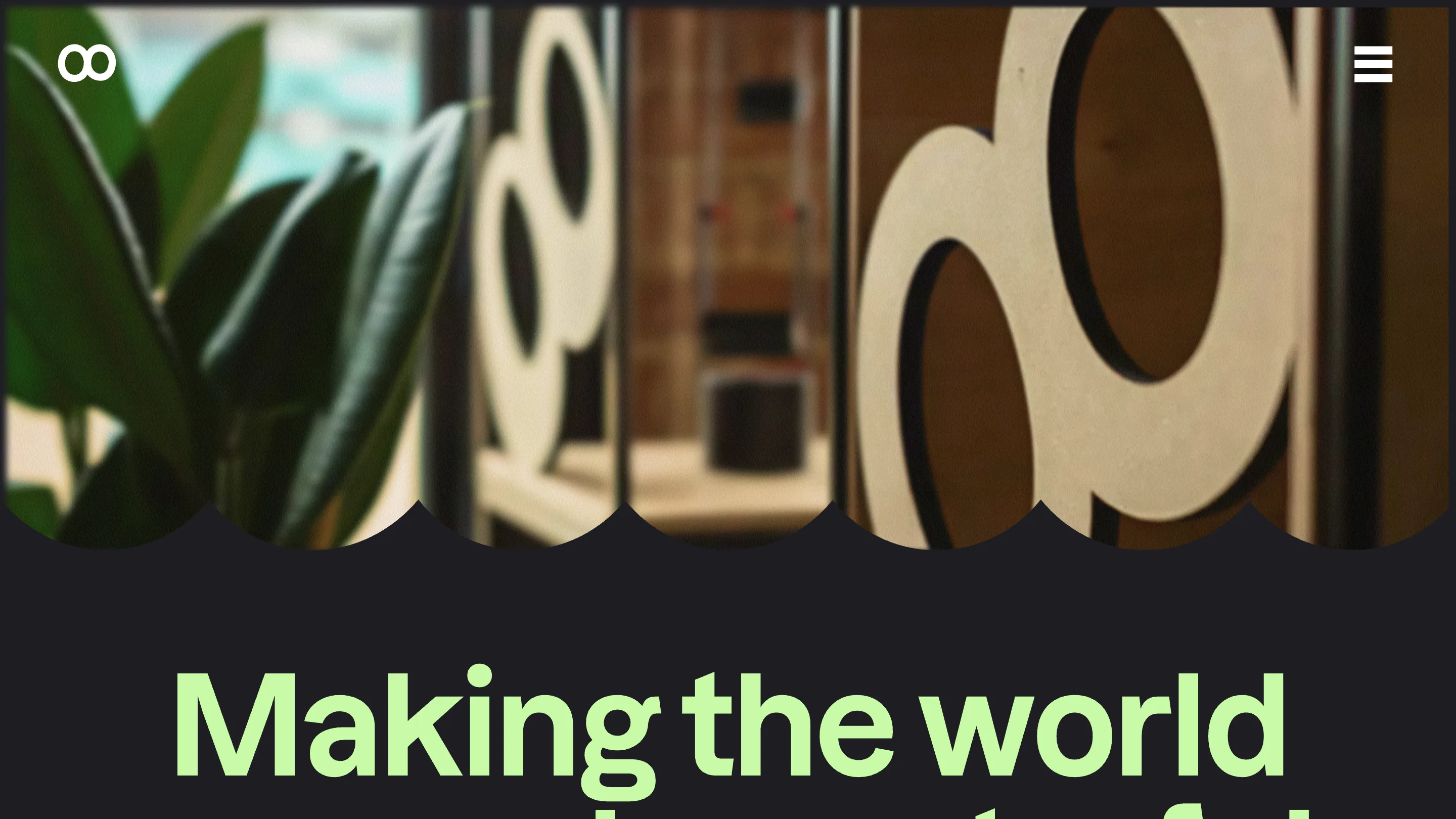
The case studies are worth an hour. Dropbox Presents opens on a chrome prism refracting a rainbow across a deep purple field, then cuts to pale pink display type at something like 120px on charcoal. Look at the bottom edge of that hero image: a scalloped mask, a row of half circles, used as the transition between image and copy. The same scallop shows up on the about page under a photo of the studio's double-O mark cut in wood. One shape, reused as punctuation across the site.
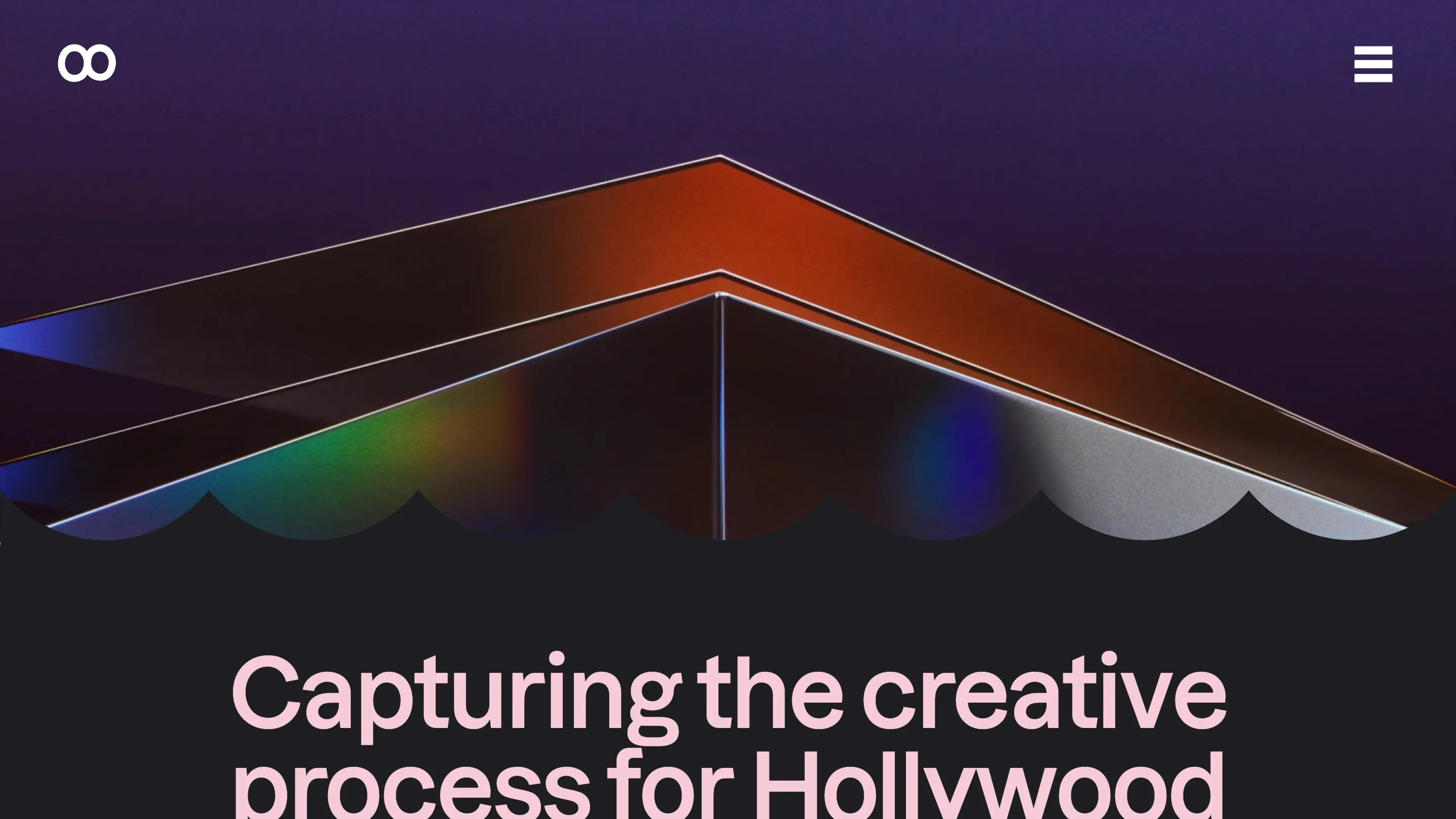
The type is one tight geometric grotesk set very large and very few colours per page, each borrowed from the work above it: pink on the Dropbox page, lime on the about page. A studio that sells character animation could easily let its own site get loud. This one keeps the page quiet and lets the work carry the colour.
The goodbye page is the last design decision
What's left at animade.tv is one screen. The two-eye mark on near-black, then a scroll to a headline reading "Over and owlt", one line of copy about bouncing into the joyful world of education, a link out and a lime green footer. Sixteen years compressed into a pun.
The smarter move is underneath it: the work went to archive.animade.tv and stayed live at its own address, with the projects and the about page intact. Anyone who wants to study how Animade timed a character blink can still do it. Studios that get acquired usually lose that.
What it means if you make product
For product designers, the brief for motion is moving down the hall. When animation lives inside the company, the question stops being what a campaign should look like and becomes what the interface should do on every tap, which is a harder and more useful question.
For studios, the read is blunter. Character animation of this quality is now a capability a consumer app buys rather than rents. Duolingo also gets a UK creative base out of it. Everyone else in the field gets a smaller pool of independents to hire from.