Weekend Max Mara paints its 3D Tuscany by hand
MONOGRID renders every WebGL surface of the Pasticcino Bag tour as brushwork, then locks each chapter until you finish the one before it.
Awards · The Editors · 4 min read ·
Featured: MONOGRID
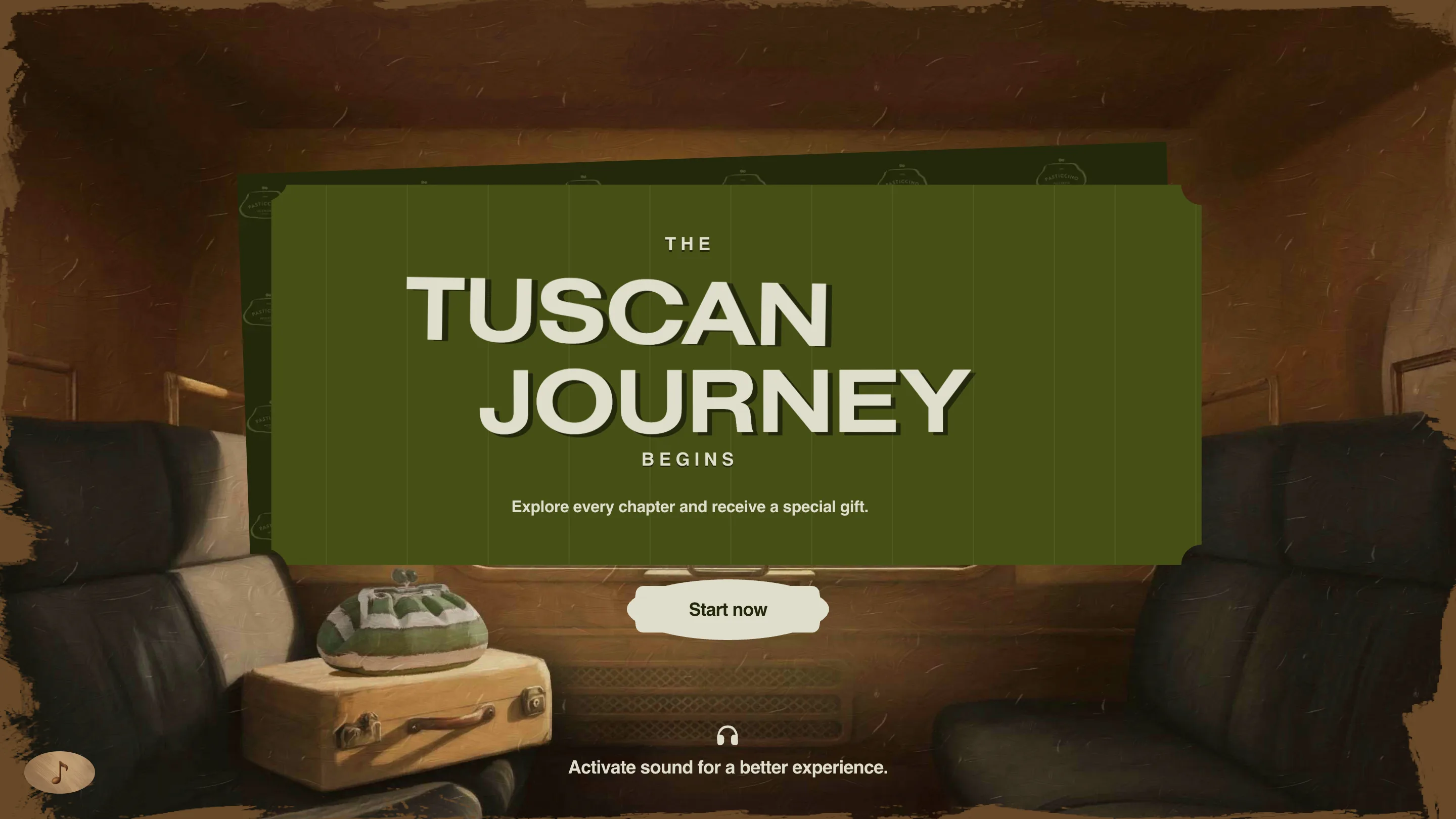
MONOGRID painted the 3D. Every surface in The Tuscan Journey Begins, the site MONOGRID built for the Weekend Max Mara Pasticcino Bag World Tour, is rendered as brushwork. The train compartment you start in, the wooden loom, the stacked blocks of marble. It took awwwards Site of the Day on 13 September 2026 with a 7.27, and the hand-painted 3D is most of the reason.
The texture is oil, the camera is still WebGL
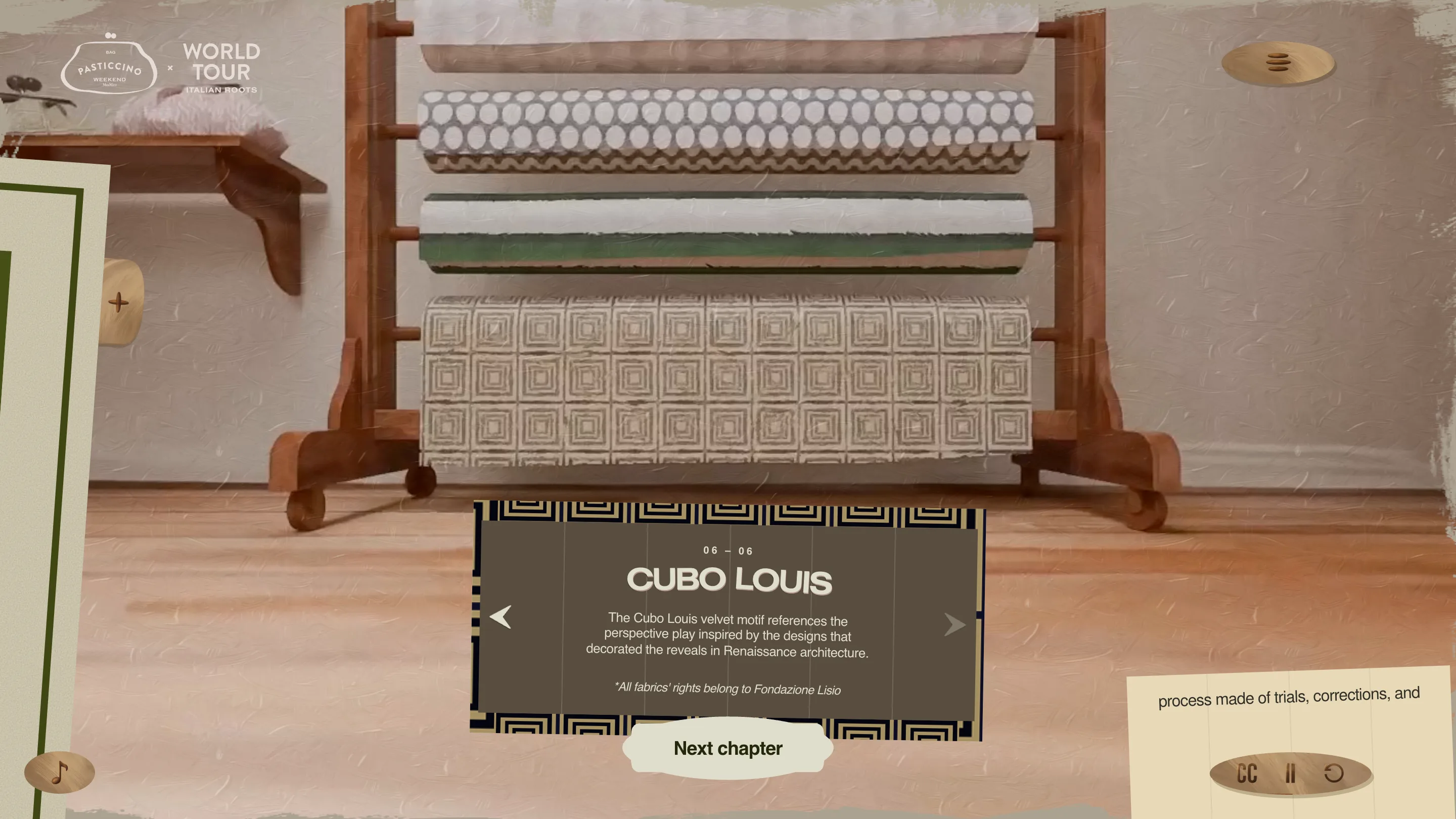
Look at the plaster wall behind the loom. It has weave in it, the tooth of a primed canvas, and the floorboards carry visible strokes that run the wrong way across the grain. Nothing is scanned. Nothing is photoreal. Then the camera pushes in and the whole painting holds depth, because it is a real scene with real parallax wearing a painted skin.
That combination is the hard part. A painted texture already has its own light baked into the strokes, so a moving scene light fights it and the surface reads as wallpaper. MONOGRID kept the light soft and nearly fixed, let the brushwork do the shading, and moved the camera slowly enough that your eye reads the strokes as part of the object.
The frame changes with the chapter
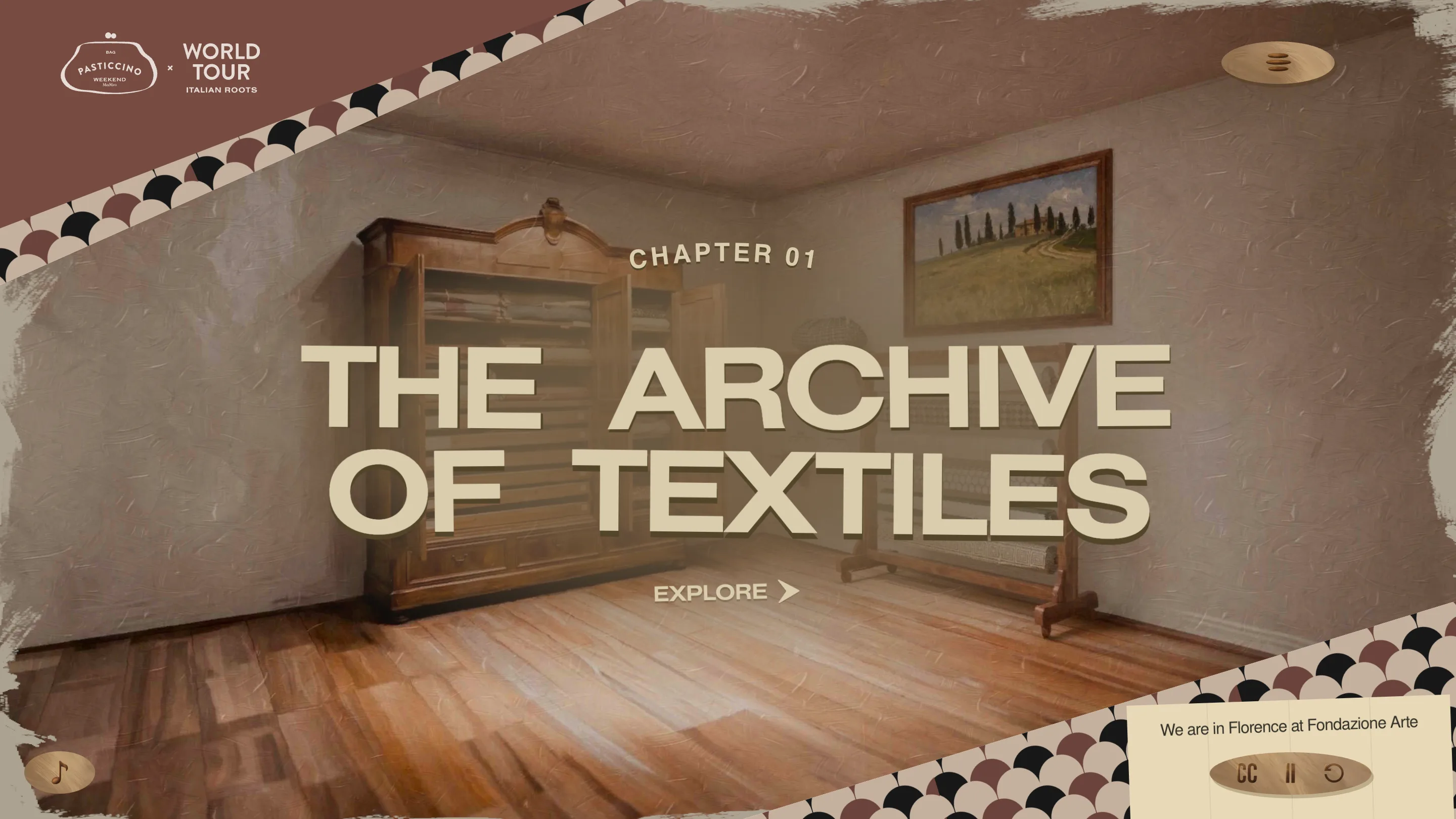
The whole page sits inside a torn paper edge, and a diagonal band of pattern cuts the top left corner. In chapter one that band is a black and maroon scallop. In chapter two it becomes a pink candy stripe over brown. The frame is carrying the chapter header, so the title type never has to shout about where you are.
The type itself is one wide grotesk in cream, set huge and tracked open for the chapter numbers. Two sizes, one weight, all caps. Against this much illustration, that restraint is what keeps the thing readable.
The caption card wears the fabric it describes
Chapter one is the archive at Fondazione Arte della Seta Lisio in Florence, and it holds six velvet motifs in a 01 to 06 carousel. Each one gets a card, and each card's border is printed with the motif it is talking about. Masaccio sits in a coral wave. Cubo Louis sits in a black and cream square maze, the same perspective trick the velvet takes from Renaissance architecture.
It costs almost nothing to build. It also turns a caption into a swatch, which is the entire point of an archive.
Hold down to carve
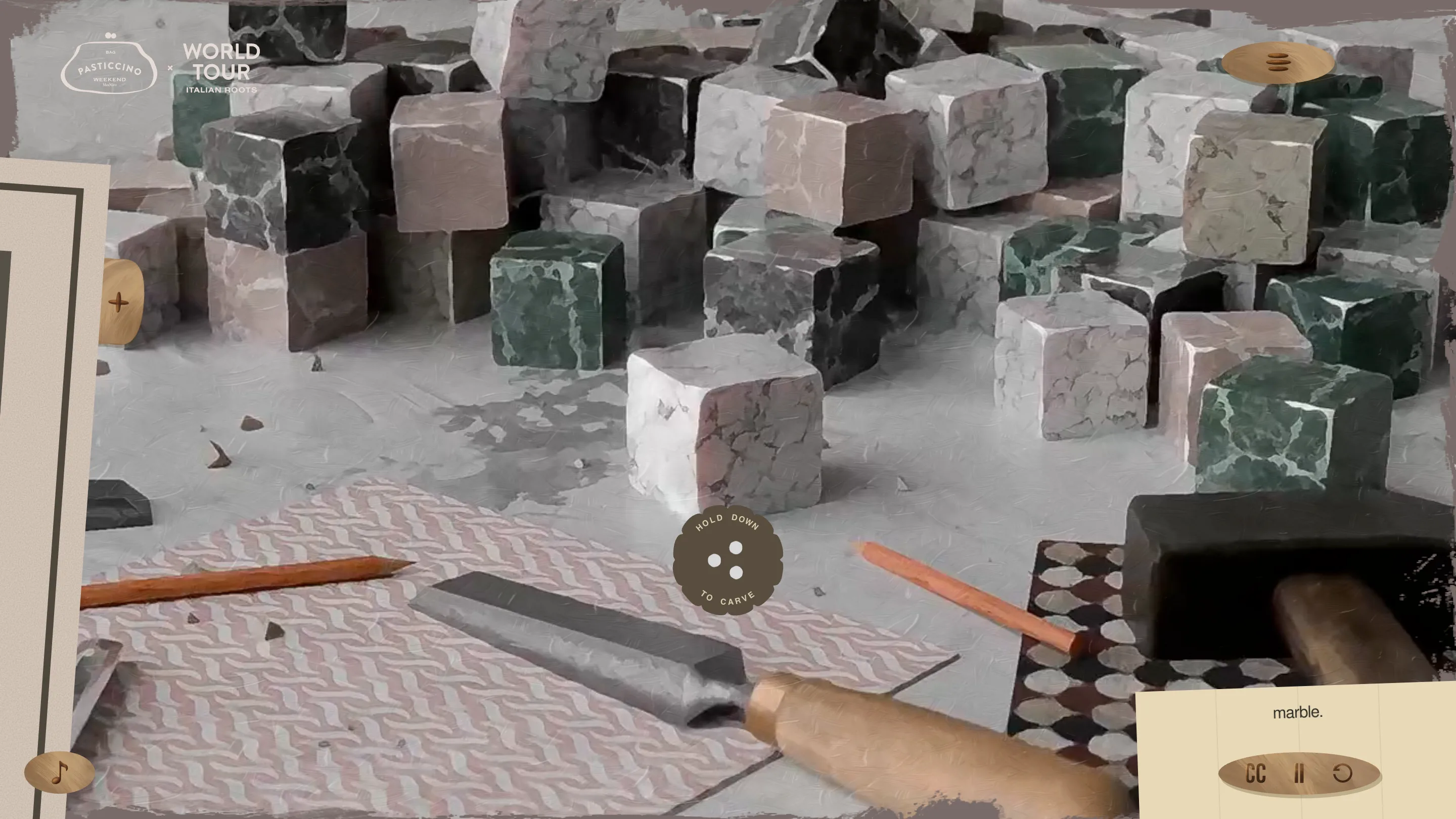
Chapter two drops you in a marble yard at Budri, blocks of Bianco Carrara, Bardiglio, Verde Alpi and Nero Portoro stacked in painted greens and greys. The cursor becomes a small brown disc that reads HOLD DOWN TO CARVE, and the surface only changes while you keep the mouse down. A chisel and a mallet lie on a patterned cloth in the foreground, in frame the whole time, so the gesture and the tools match.
One gesture per chapter, tied to what the workshop actually does. Chapter one is browsing an archive. Chapter two is cutting stone. Chapter three, still locked on a first visit, is leatherwork in San Miniato.
The parts that cost it
The chapters lock. You cannot jump to the marble until the textiles are done, and the menu shows the next two greyed with a padlock. For a brand story that is a defensible call. For anyone who landed from a link, it is a wall.
There is also an email capture between the intro and chapter one, with a Skip sitting low and quiet under the submit button. And the site opens on a prompt to turn sound on, because the narration is the spine of the whole thing. MONOGRID transcribes it live in a paper panel bottom right, with CC, pause and replay controls, so you can follow the whole thing with the sound off. The dev score still came in at 6.67 against the 7.27 design score, mostly on markup and semantics.
MONOGRID is based in Florence. So is the Lisio archive in chapter one. This is their 43rd Site of the Day, and it reads like a studio painting its neighbours.