Edolus is a fictional AI brand built as a WebGL showreel
Vertex3D invented an AI infrastructure company, named its chips and wrote its specs, then shot it with one scroll-driven camera. It won Site of the Day.
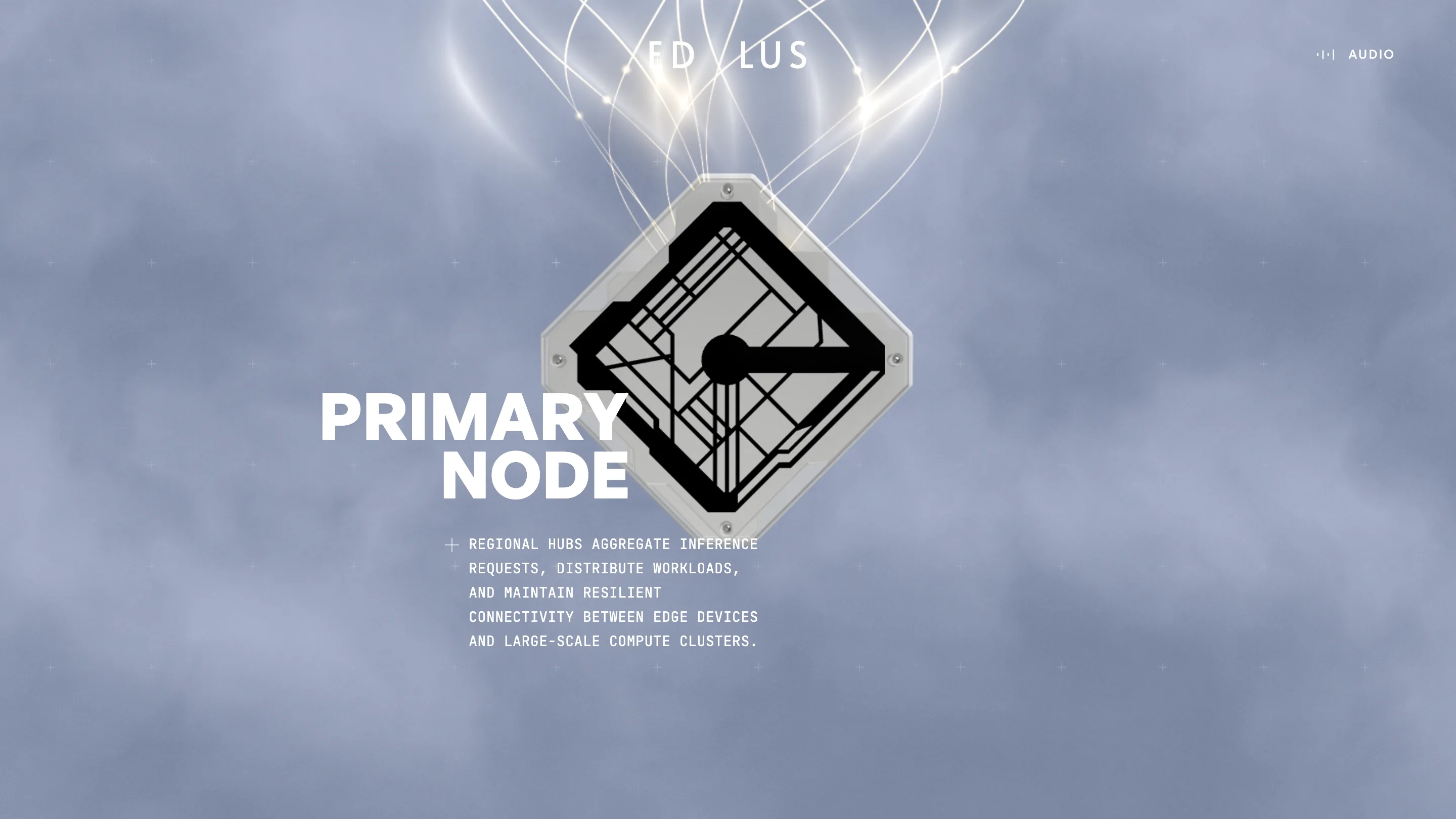
Edolus sells AI infrastructure that doesn't exist. The satellites, the data centre, the EDL-72 compute core: Vertex3D invented all of it, gave it a brand and a script, then built the whole thing as a WebGL showreel. The last screen admits it in three lines. "Edolus never existed. The experience did. Now imagine your own."
That reveal is why the site works. Vertex3D wrote its own client and gave it the treatment a paying one would get. It took awwwards Site of the Day on 4 October 2026 with a 7.2, and the Developer Award score came in higher, at 7.82.
A fictional brand with a real art director
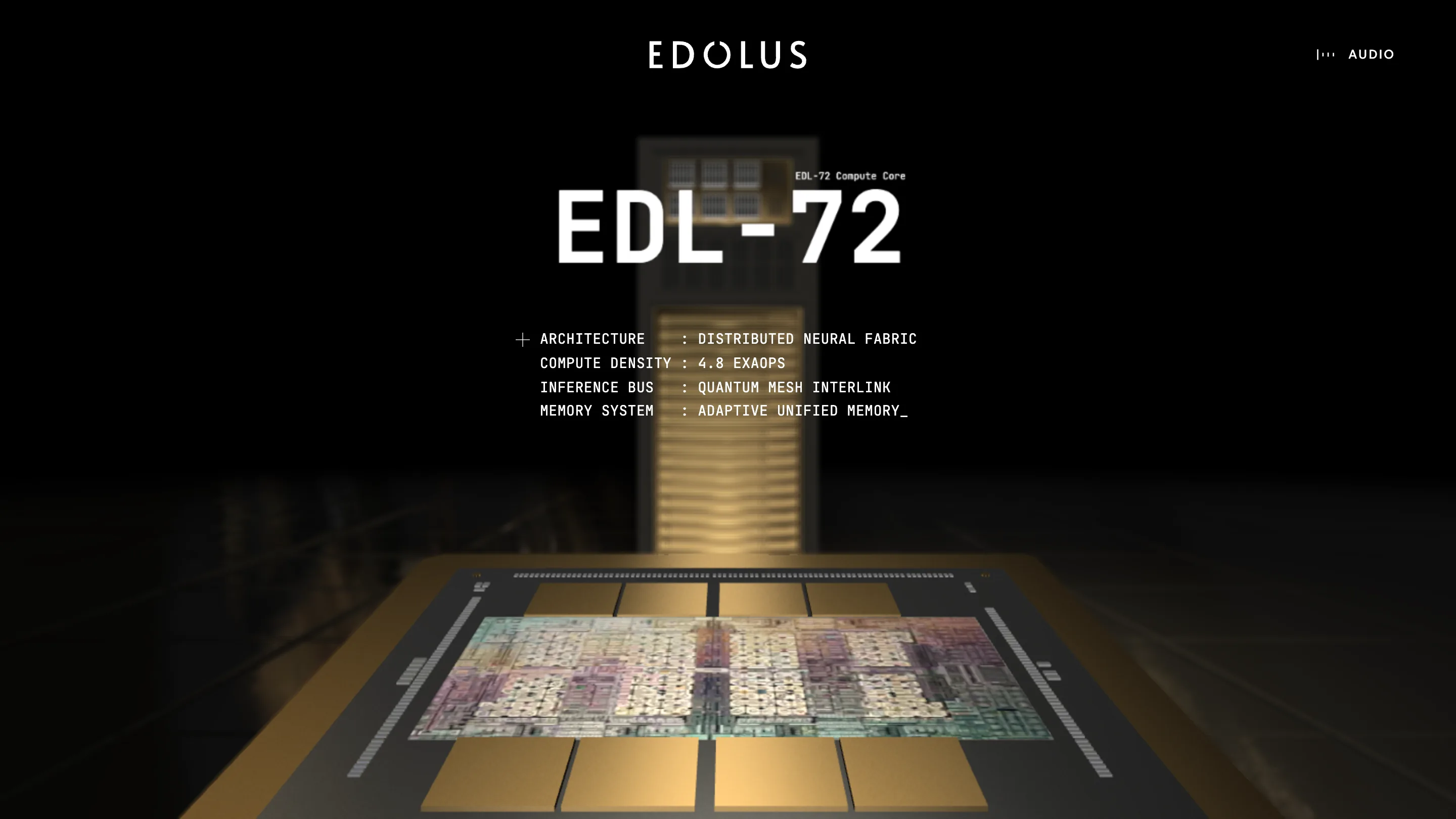
The fake company gets everything a real launch would. There's a wordmark whose O flickers like a signal dropping out. There's a product naming system (NVX-72 for the rack, EDL-72 for the chip) and a spec sheet typed out in a monospace HUD: "Compute Density : 4.8 ExaOPS", "Thermal Design : Cryogenic Liquid Transfer". None of it is true. All of it is consistent, and that's what makes the invented company believable for the few minutes you spend in it.
The type does two jobs. General Sans, heavy and tight, carries the chapter titles: ORBITAL INTELLIGENCE, PRIMARY NODE, URBAN SYSTEMS. A mono face carries the data, and it scrambles into place letter by letter, with its own sound effect. You read the headline as a brand and the small print as a machine.
One camera, one zoom
The story is one long descent. You start above the atmosphere next to a satellite, fall through cloud onto a regional hub, then down to a city drawn as a glowing grid over desert relief. From there the camera enters a data centre, pulls a tray out of a rack, and lands on the die of a chip. Then it drops into the chip itself, a field of gold particles labelled the intelligence layer.
Every scene is a step down in scale, and the copy follows the camera. The satellite talks about the planet, the hub about regions, the city about services, the rack about workloads. By the time you reach the silicon, the site has explained a whole stack without a single diagram.
Scroll as a timeline, with brakes
It's built in PlayCanvas, and the scroll is a timeline 32,000 pixels long. The first 1,200 pixels only lift the title screen. After that the scroll manager stretches the bands where something needs time to land: the chip's quantum dive scrolls two and a half times slower than the rest, and the map, the cards and the car's closing lines run at about two-thirds speed. Stop scrolling near a chapter and it settles onto it.
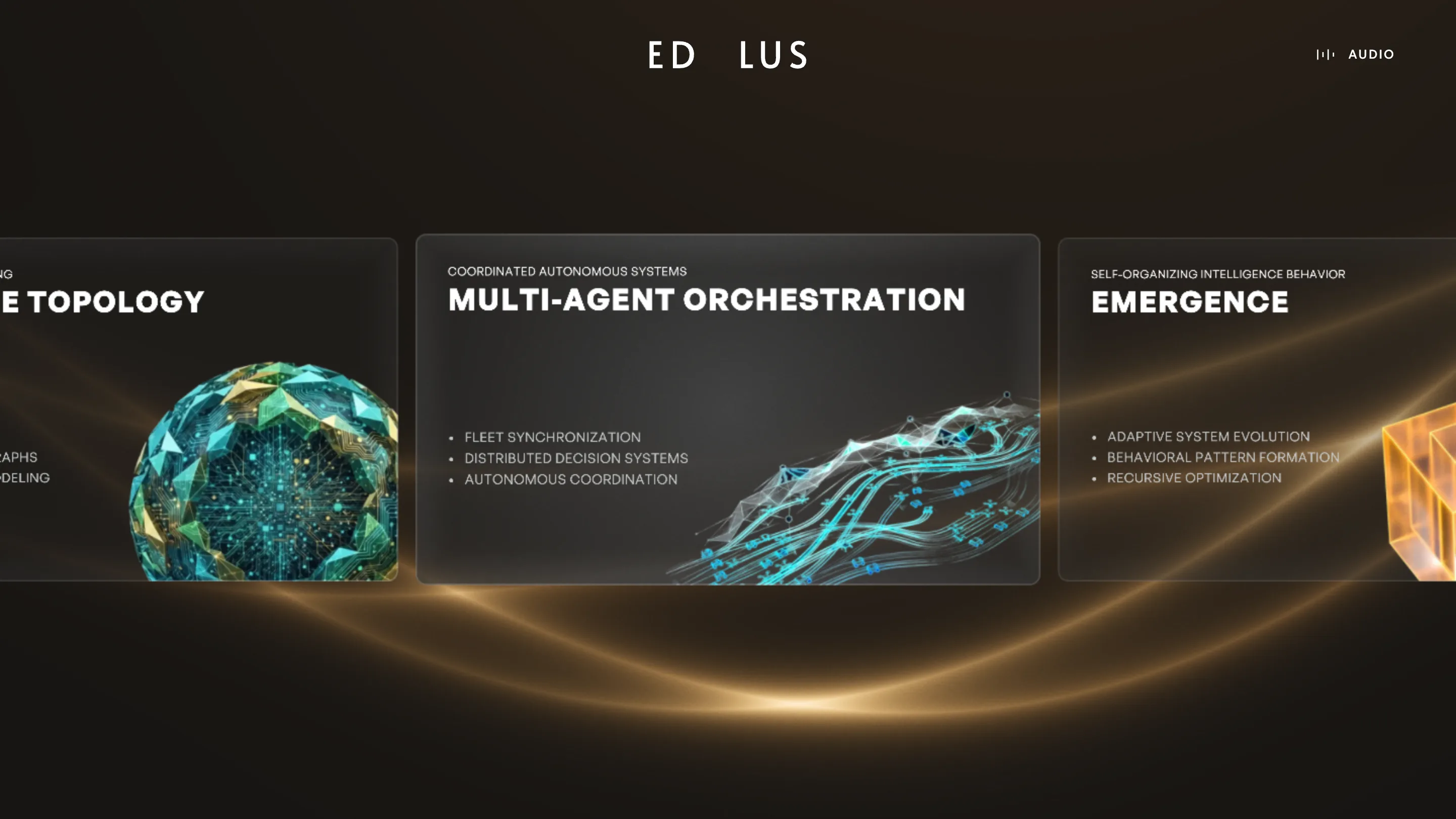
That pacing is the craft a judge rewards here. The fast parts are transit. The slow parts are the ones you're meant to look at. The capability cards (reasoning, knowledge topology, multi-agent orchestration, emergence) glide across a warm gold ribbon slowly enough to read, each with its own rendered object.
Sound you're told to wear
The start screen says "Experience with headphones", and it means it. The score ships as three stems (bass, melody, instruments), and every chapter triggers its own cue: the map, the rack, the chip, the text scramble. The sound marks each change of scale the way a cut does in film.
Why this WebGL showreel won
Edolus is a pitch. The ending swaps the brand for Vertex3D's logo and an email address, so everything before it is the portfolio piece. What makes it good is the discipline of the fiction: a naming system, a type system, one camera and one direction of travel, held from the first frame to the credits. A studio that can invent a client this completely is showing you what it would do with yours.