Colonia Zacamil puts a past-present switch on a 3D map
A 3D map of a Salvadoran housing estate with a switch that strips its murals off. Flip it and you see what the art changed.
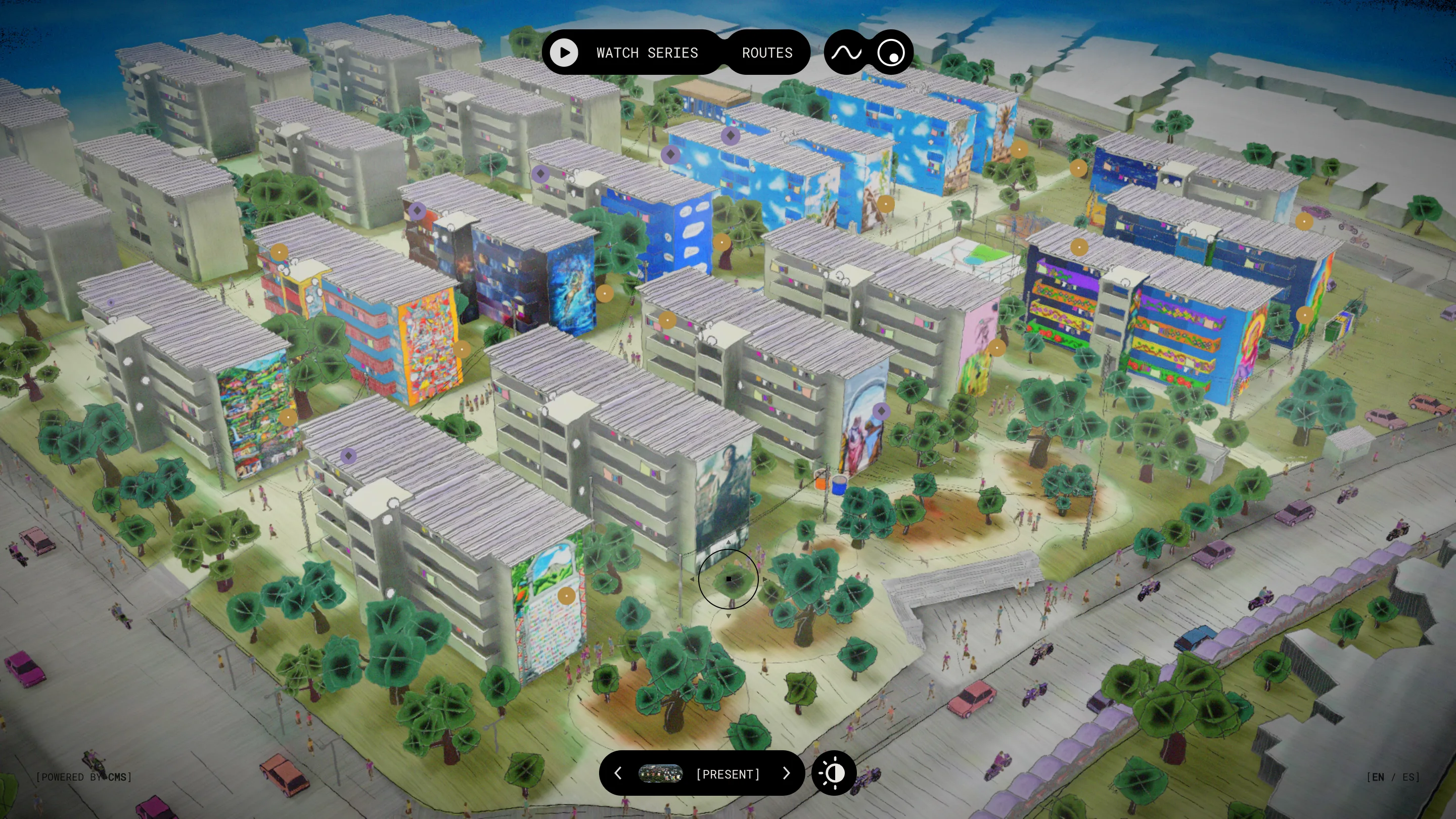
Colonia Zacamil puts a two-word switch under its 3D map: past and present. Flip it and the same housing blocks lose their murals, the painted gables go back to grey concrete, and you see what a public art project changed in one neighbourhood. That switch is the whole argument of the site, and it's why the piece took awwwards Site of the Day on 1 October 2026, with a score of 7.58 and a Developer Award on top.
The site was built by Adoratorio Studio with 60fps, for Custom Made Stories (CMS), an artist-run foundation working on regenerative placemaking in El Salvador. Zacamil is a housing estate of long four-storey blocks. CMS has been covering their end walls with murals since 2024, and the site turns that work into a place you can fly over.
A 3D map you read like a guidebook
Press Discover and the camera drops onto a model of the estate. You drag to move, scroll to zoom, and click the pins. There are 22 of them, each named after its mural: From Thorns, Santa Zacamil, Paz y Pachamama, Fire Tree, Migrations. Eight of them can't be opened yet. The project is ongoing, and the map marks those walls anyway, with their names and no story yet.
The model is drawn more than rendered. Trees are flat, inked shapes with a scribbled shadow. The ground has a pencil grain. Cars and tiny people move along the streets. Next to that hand-drawn world, the murals are the only saturated things on screen, so your eye goes straight to the art. A judge would rate that as art direction doing the job of navigation.
The past and present switch
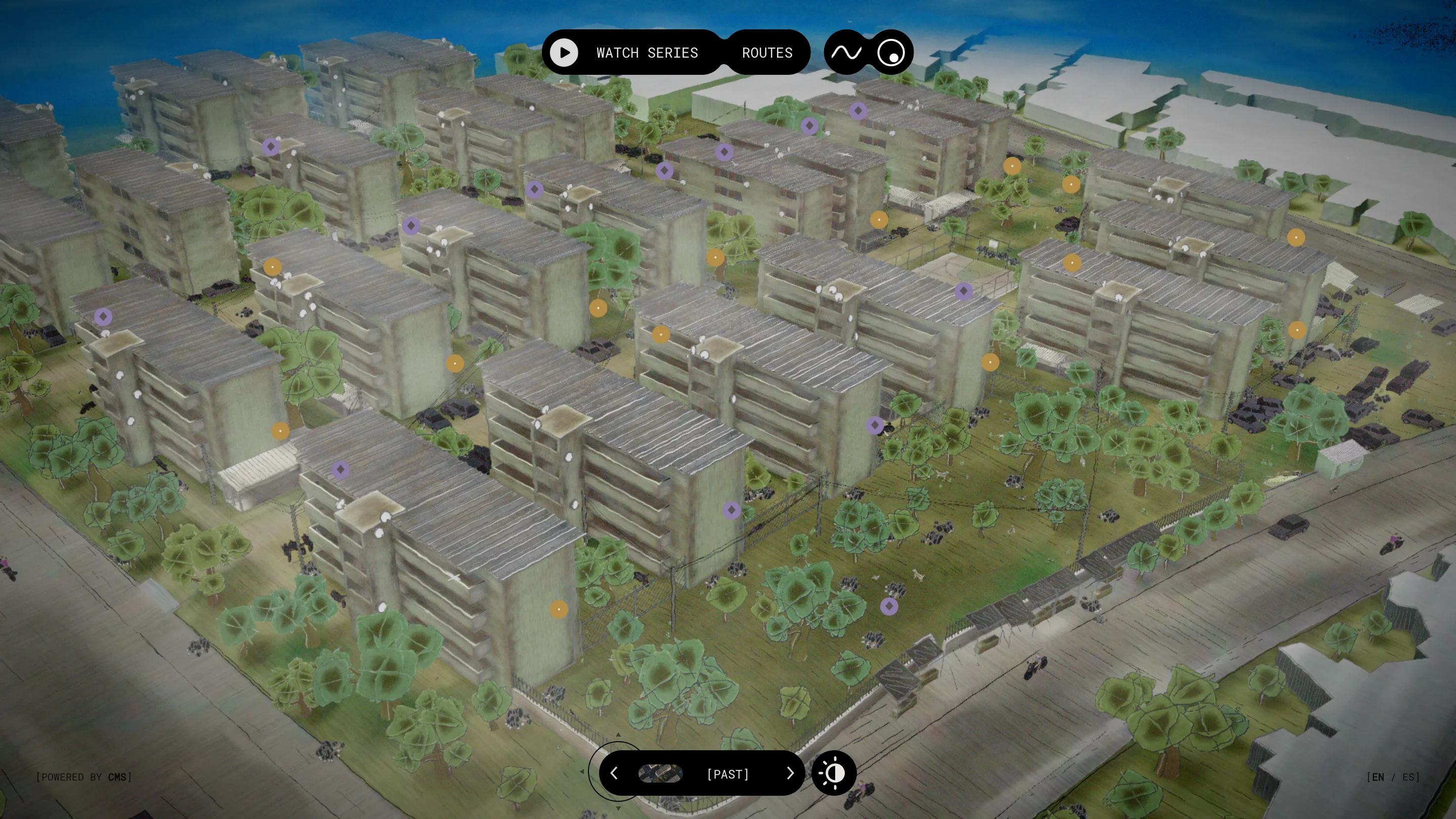
The control at the bottom of the screen holds a thumbnail, two arrows and a label in brackets: [PRESENT]. Click the left arrow and the label turns to [PAST]. The camera stays where it is. Only the walls change. The blue and green gables become bare render, and the pins sit on blank concrete.
This is the strongest idea on the site, and it's a small one. The comparison happens inside the space you've been exploring, from your own camera angle, so the change lands on buildings you already know. A sun icon next to it switches the whole map to night: murals lit, streets dark, pins glowing in ochre.
A mural opens as a page
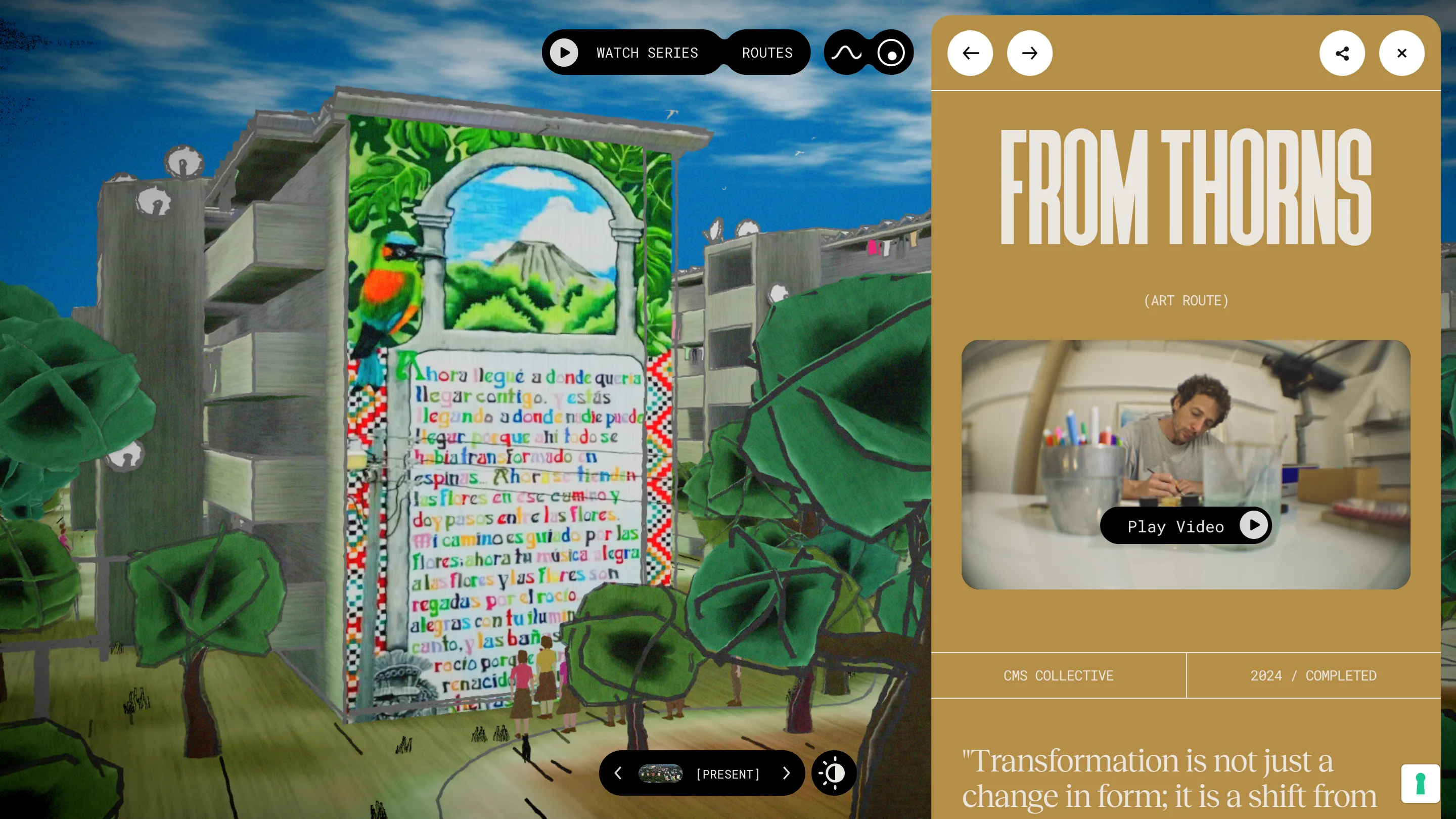
Click a pin and the camera flies to the wall while a panel slides in from the right. From Thorns shows a Nahuatl poem framed as the first page of an illuminated book, with a torogoz, El Salvador's national bird, perched on the border. The panel stacks the title in the same condensed display type as the landing, a short film of the artist at work, the credit line (CMS Collective, 2024, completed) and a few paragraphs on who conceived it and who painted it. Arrows at the top step you to the next mural without closing anything.
The panel is set in an ochre that matches the pins, and the body copy sits in a bookish serif. It feels like a museum label, which suits the material.
Big condensed type, then silence
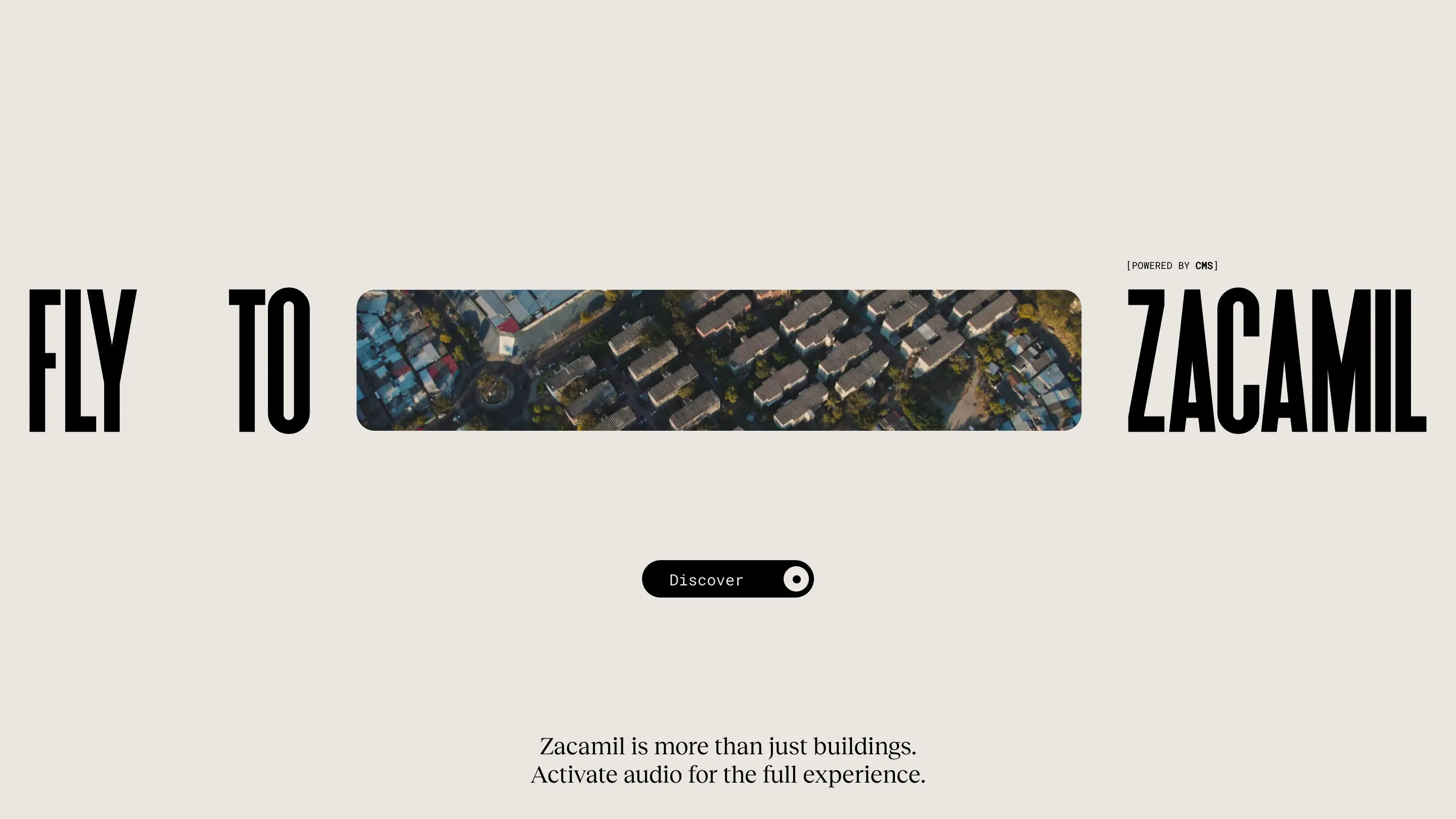
The landing is three words: FLY TO ZACAMIL, in a tall condensed grotesk, with a drone shot of the estate playing in a rounded window between TO and ZACAMIL. Under it, one button and one line asking you to turn the sound on. The palette is the warm putty and black awwwards logged for the site, and nothing else competes with the video.
That restraint pays off once you're inside. The interface stays in small monospaced labels in brackets, the controls are two pill bars, and the murals carry all the colour.
What to take from it
Colonia Zacamil works because it picks one comparison and builds the interface around it. If you're designing an impact report, a place-based campaign or a heritage project, put the before and the after in the same space and let people switch between them from where they stand. When the switch sits on a map people have already explored, the difference lands on streets they know.