Hornet launches Perfect Stranger, an integrated creative studio with no handoffs
Hornet spun out Perfect Stranger, a 20-person studio that runs strategy, brand, and production as one team. The bet: kill the handoffs and the work gets heavier.
Hornet, the New York animation and production studio, has launched a sister company called Perfect Stranger, and it's built as an integrated creative studio: one team running strategy, brand, design, and production, with nobody handing a file to the next vendor. The launch landed on July 2.
That last part is the whole idea, and it's why this matters to anyone who makes digital products. At Perfect Stranger, the people who set the strategy sit next to the people who ship the final frame. Daniel Fries, the executive creative director, put the benefit plainly. "We can pivot on the fly," he said. "We have a certainty and agility they don't."
What the integrated studio model buys you
Anyone who has moved work across a strategy deck, a design file, and a production house knows where the value leaks. Every handoff is a re-brief. Context gets lost, intent gets softened, and the thing that made the idea good in the room rarely survives three teams later.
Perfect Stranger's answer is to keep the work in the same hands, start to finish. Fries frames it as a response to what clients kept asking for. "We created Perfect Stranger in response to a very real need we saw from brands for a more agile, integrated creative partner," he said. The company opened with 20 people and plans to grow its creative, account, and business teams over the year.
Built on 25 years of Hornet
The bet isn't coming from a standing start. Hornet has spent 25 years as a production studio, with Clio-winning work for Tiffany, Meta, Amazon, and Estee Lauder. Perfect Stranger inherits that production muscle and points it at brand strategy on day one. Fries is careful about the order. "While our integration is a big benefit for clients, we still lead with brand and strategy," he said. Production is the engine, not the headline.
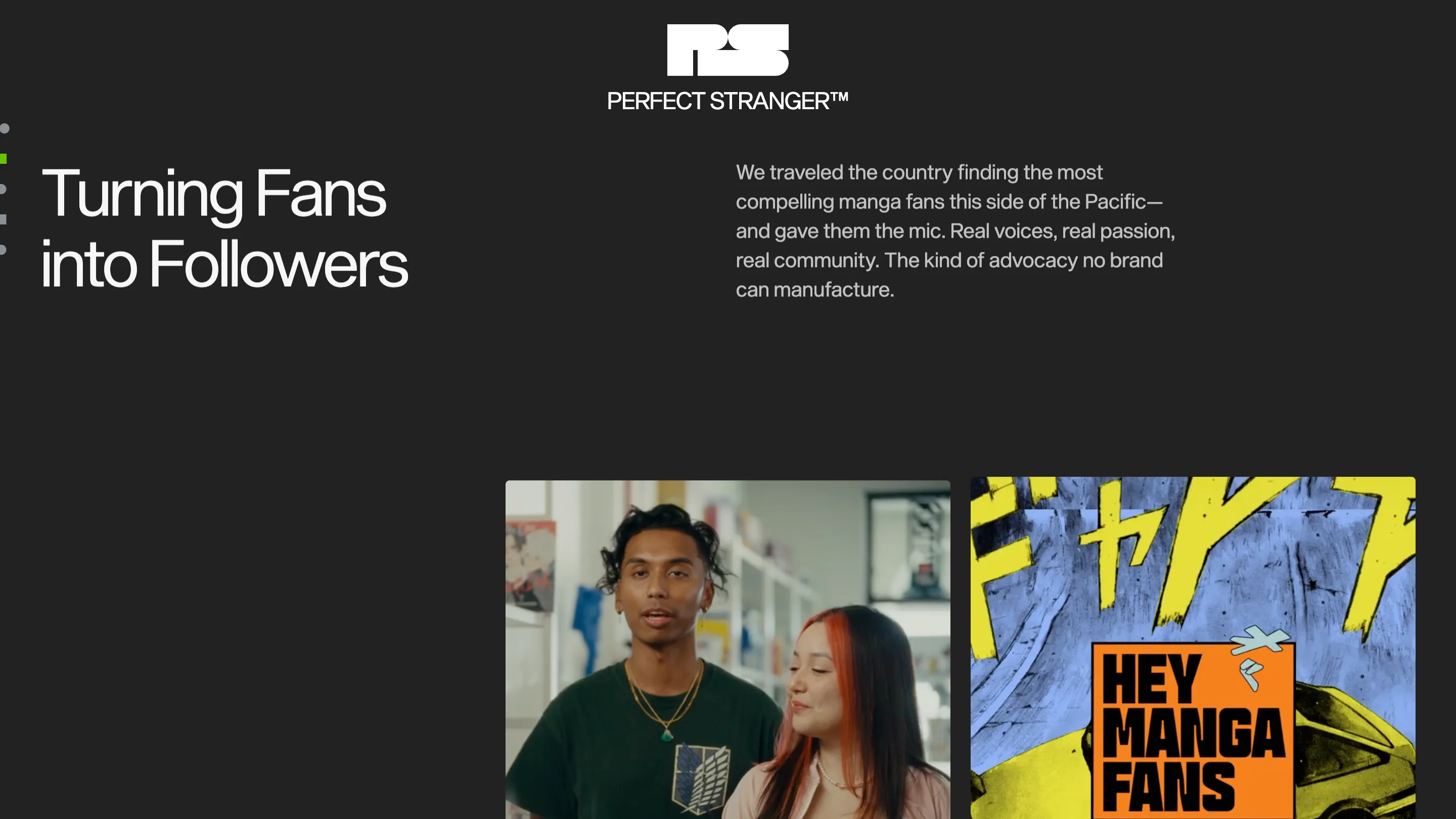
You can read the intent in the work. The studio's Kodansha project, "Turning Fans into Followers," skipped the usual brand film. The team traveled the country, found real manga readers, and gave them the mic. It's the kind of advocacy a brand can't manufacture, and it only holds together when the people who wrote the strategy also directed the shoot.
The model designers should watch
Set aside the advertising label for a second. The structure Perfect Stranger is selling is the same one product teams have been chasing for years: collapse the roles, kill the handoffs, keep strategy and craft in one loop. Design systems did it inside the browser. Full-stack studios are doing it across a whole product. Perfect Stranger is doing it across strategy, brand, and film.
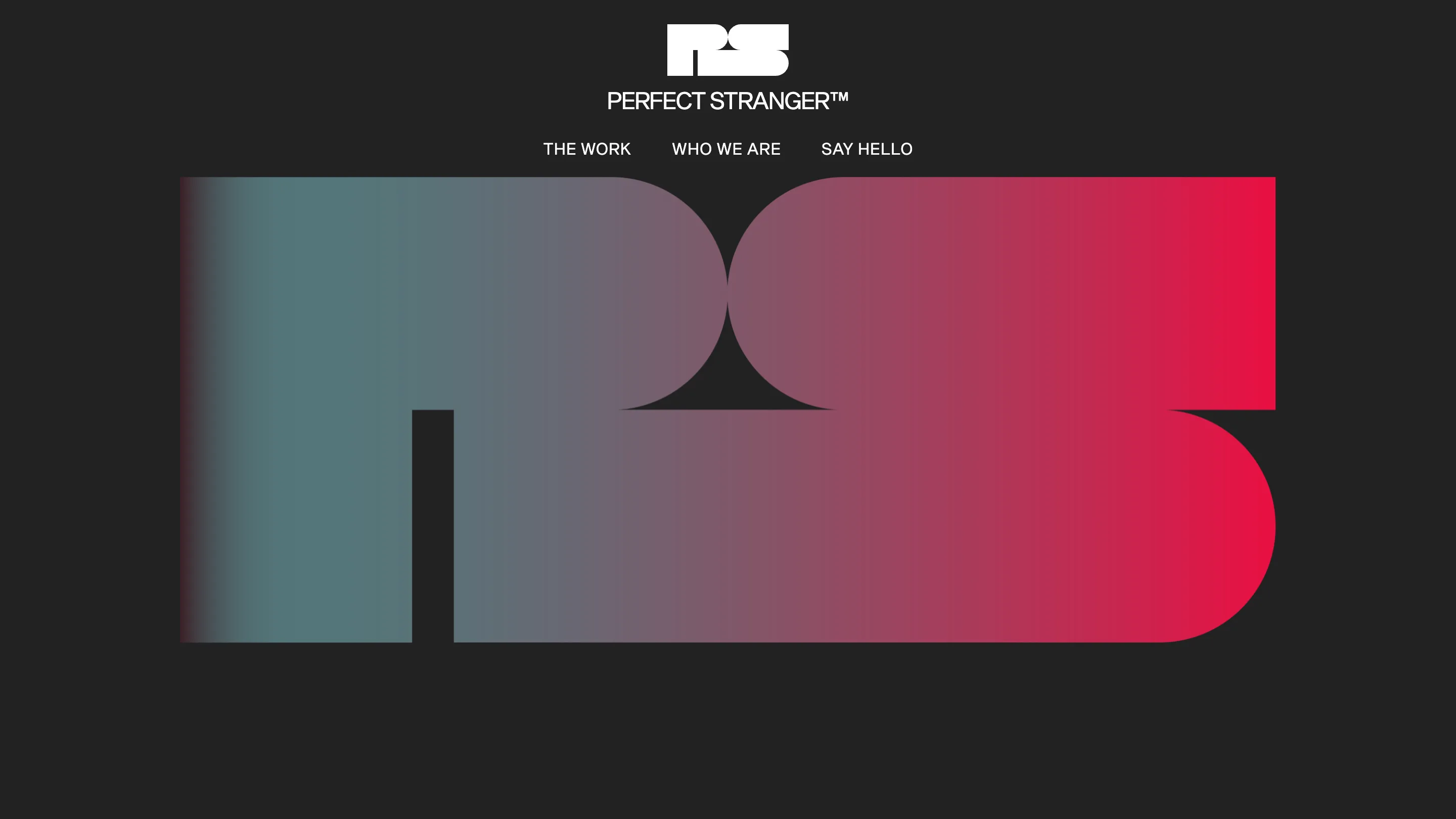
Its site says the quiet part out loud. "Brands don't need more campaigns. They need gravity." The opening line of the manifesto reads, "Most brands try to be seen more." The rest of the pitch is about weight over volume, and the org chart is the argument. A 20-person shop that owns the whole chain can make a smaller, heavier thing than five vendors passing drafts.
The combined roster already includes Trimble's SketchUp, eero, Homes.com, and the 100-year-old Japanese publisher Kodansha. Watch whether the no-handoff promise holds as the headcount climbs. It usually breaks around the point a studio adds its second producer. If Perfect Stranger keeps it, the model is worth copying.