Rive builds the interactive animation your app actually ships
Rive lets a designer build stateful, data-driven interactive animation that ships straight to the app, with no rebuild by an engineer. The AI agent that scaffolds it is now free for everyone.
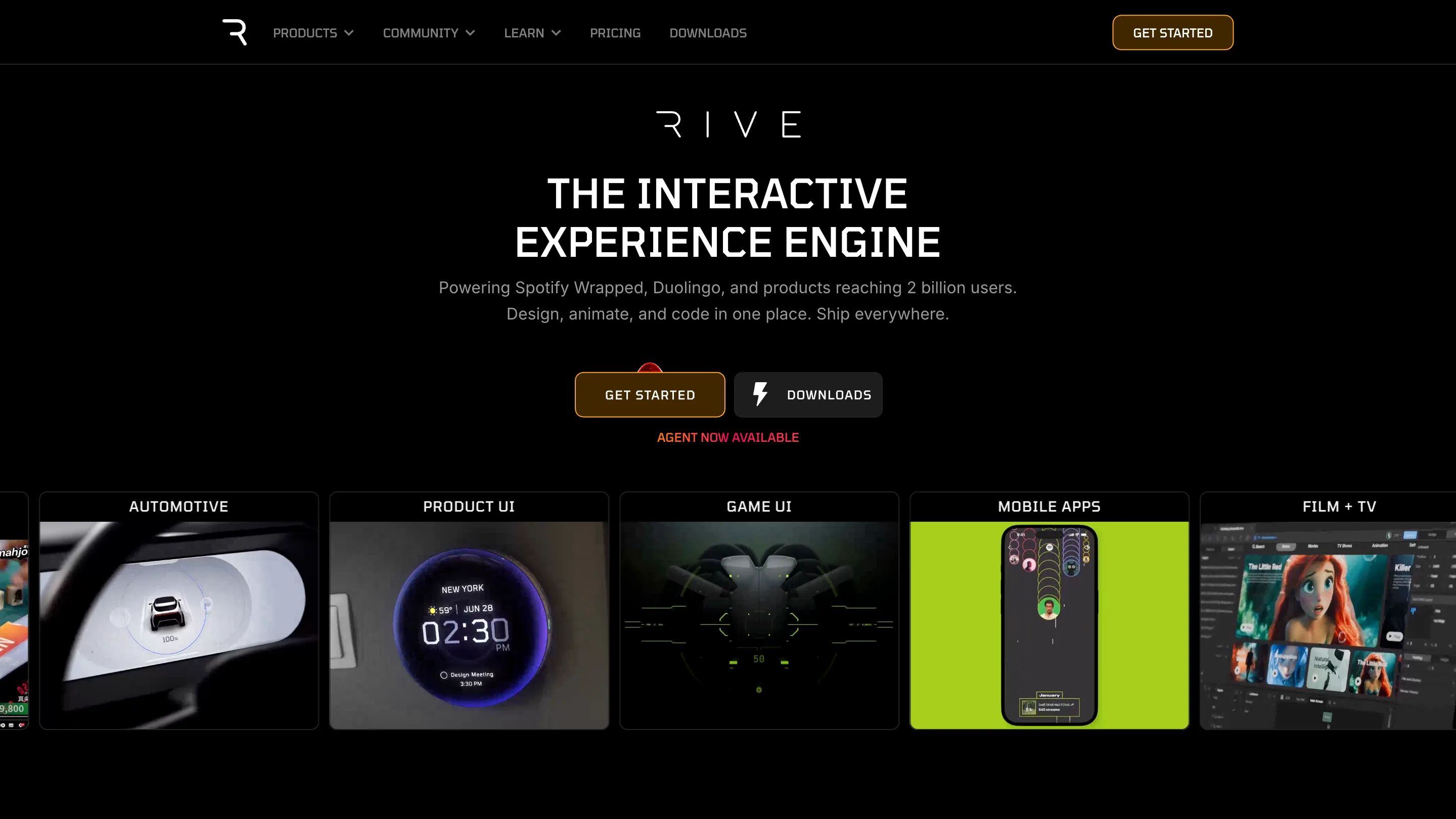
Open Rive and you build the actual interaction, the thing that runs in the shipped app. That is the whole pitch behind Rive, the interactive animation engine that Spotify, Duolingo, Disney, Google, and a row of carmakers use to reach a couple billion screens.
A designer builds the motion once. It exports as a live file that runs natively on Web, iOS, Android, Flutter, React, Unity, and Unreal. No engineer rebuilds the interaction from a spec or a video. The file the designer approves is the file that runs in production. One studio on Rive's site reports 4x faster production and files up to 90% smaller than the video or Lottie route.
The interactive animation is the component
Most motion tools stop at playback. You make a loop, hand off a Lottie or an MP4, and someone else wires up when it plays. Rive skips that step because the logic lives in the file.
You draw in a vector editor, animate on a timeline, then wire behavior with a state machine: animations become states, and you connect them with transitions that fire on conditions. A button becomes a state machine that knows idle, hover, pressed, and disabled, and moves between them on cue. The clip and the behavior are one artifact.
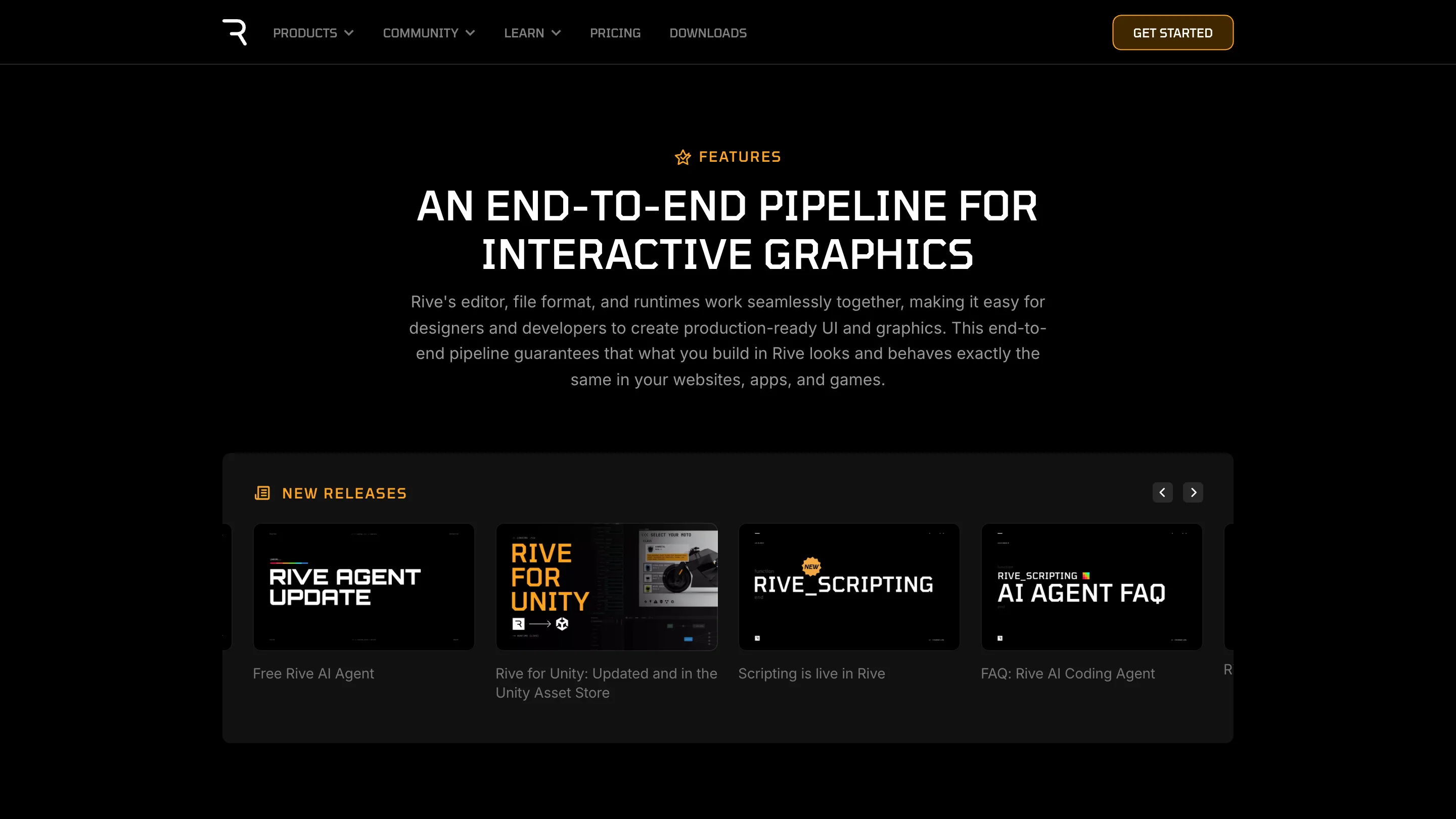
Listeners, inputs, data binding
Three features carry the interactivity, and they are worth knowing by name.
Listeners let the graphic respond to hover, click, tap, and drag, all set up inside the editor. Inputs are the contract between the designer and the code: the engineer flips a boolean or sets a number, the animation reacts, and neither side has to touch the other's work. Data binding connects animation properties to real values, so a progress ring fills from actual progress and a character's face changes with a live score.
Put together, a designer hands engineering a component that already knows how it behaves. The code just feeds it data.
The AI agent is now free
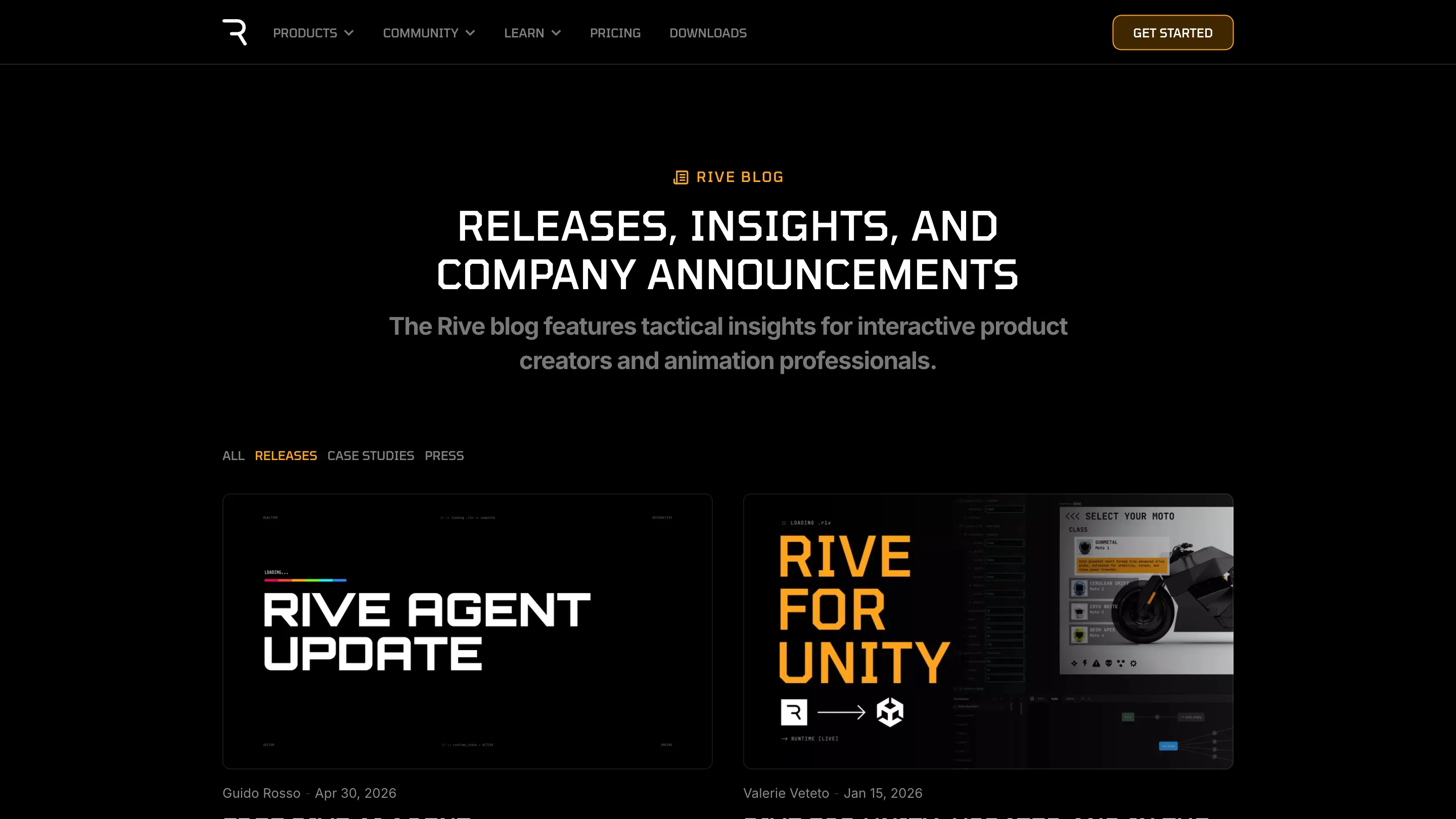
As of April 30, Rive opened its AI agent to everyone, including the free plan. The agent helps you build and learn inside the editor, and a lighter Ask mode answers quick questions without spinning up the full thing. Free accounts get a pool of agent capacity that refills every hour. Paid tiers start at $9 a month for cheaper exports and $20 for the premium models with monthly credits.
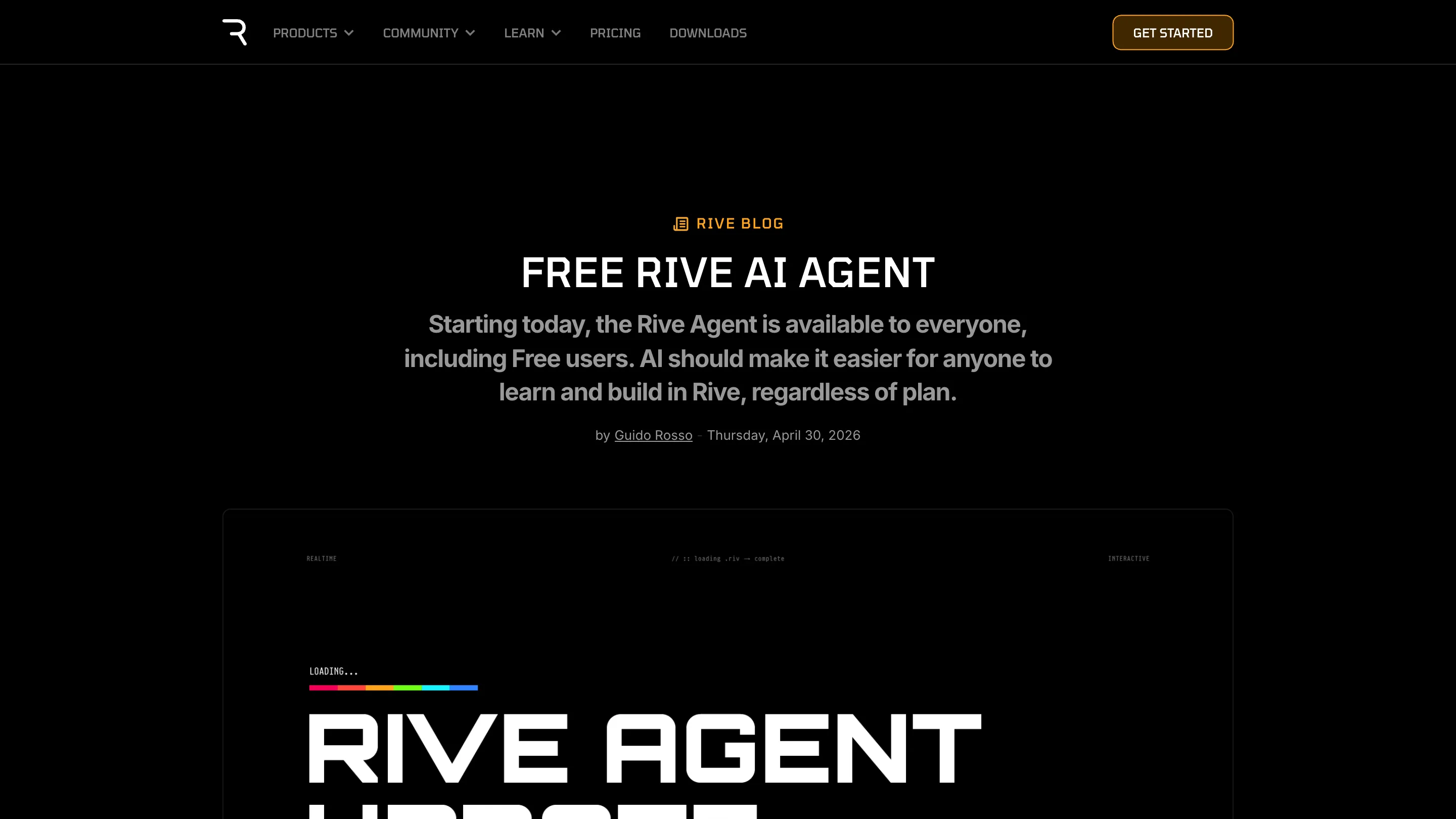
For anyone who has bounced off state machines before, this is the real change. The mental model takes a while to sink in. An agent that scaffolds the first state machine for you shortens the climb.
Where it bites
Two honest caveats. State machines are a new way to think, closer to building a small program than keyframing a clip, and the first few files feel slow. And the agent's free credits go fast, which is the top complaint on Rive's own thread. The team calls this an early release and points people to Discord for feedback.
Still, if your work ends up as buttons, toggles, loaders, and characters that react to a user, Rive is worth an afternoon. You build the real thing, and it ships.